
Tanzania
Where Africa’s Story Begins
The wildest country in Africa. Home to the Serengeti — the greatest wildlife spectacle on earth — the world’s largest intact volcanic caldera, Africa’s highest mountain, the spice island of Zanzibar, and some of the last truly remote wilderness left on the planet.
Africa’s Wildest Stage
From the Serengeti’s endless plains to Zanzibar’s coral reefs — Tanzania packs more world-class wildlife experiences into one country than anywhere else on earth.
Tanzania is Africa in its most undiluted form. The country covers 945,203km² — more than twice the size of California — and shelters the continent’s greatest density of UNESCO World Heritage Sites, the largest animal migration on earth, the highest free-standing mountain on the planet, and a Swahili island civilisation 1,500 years in the making.
The northern safari circuit — Serengeti, Ngorongoro, Tarangire, Lake Manyara — forms one of the greatest collections of wildlife destinations in the world. The southern circuit — Nyerere (Selous), Ruaha, and Mahale Mountains — offers a completely different Tanzania: vast, remote, uncrowded, and extraordinary. Zanzibar and Kilimanjaro bookend the experience from either end of the country.


The greatest collection of wildlife destinations ever assembled in one region — the Serengeti, Ngorongoro, Tarangire, and Lake Manyara each offer a radically different experience, within four hours’ drive of each other.
Serengeti National Park
📍 Mara & Simiyu Regions · Northern TanzaniaThe greatest wildlife stage on earth — 14,763km² of rolling savanna hosting the most spectacular animal concentrations anywhere in Africa. The Great Wildebeest Migration — 1.5 million wildebeest, 250,000 zebras, and 470,000 gazelles in permanent circular motion — is the largest overland animal movement on the planet. The Serengeti is magnificent year-round: unparalleled lion density, extraordinary leopard sightings in the Seronera Valley, resident cheetah families, and the densest Big Five population anywhere. UNESCO listed.
The Grumeti River crossings in June–July and the Mara crossings in August–October are nature’s most dramatic spectacles — a wall of wildebeest plunging into crocodile-filled water. But the Serengeti in the “quiet” months still delivers more lions per square kilometre than anywhere else on earth.
🔴 Peak Jan–Feb (calving), Jun–Oct (crossings) · 🟢 Good year-round
Migration Calendar
The Migration is year-round — the herds never stop moving. January–February: calving season in the southern Ndutu area — 8,000 calves born daily. April–May: the herds move north through the central corridor. June–July: Grumeti River crossings. August–October: the famous Mara River crossings on the Kenya border — the most dramatic. November–December: herds scatter south again.
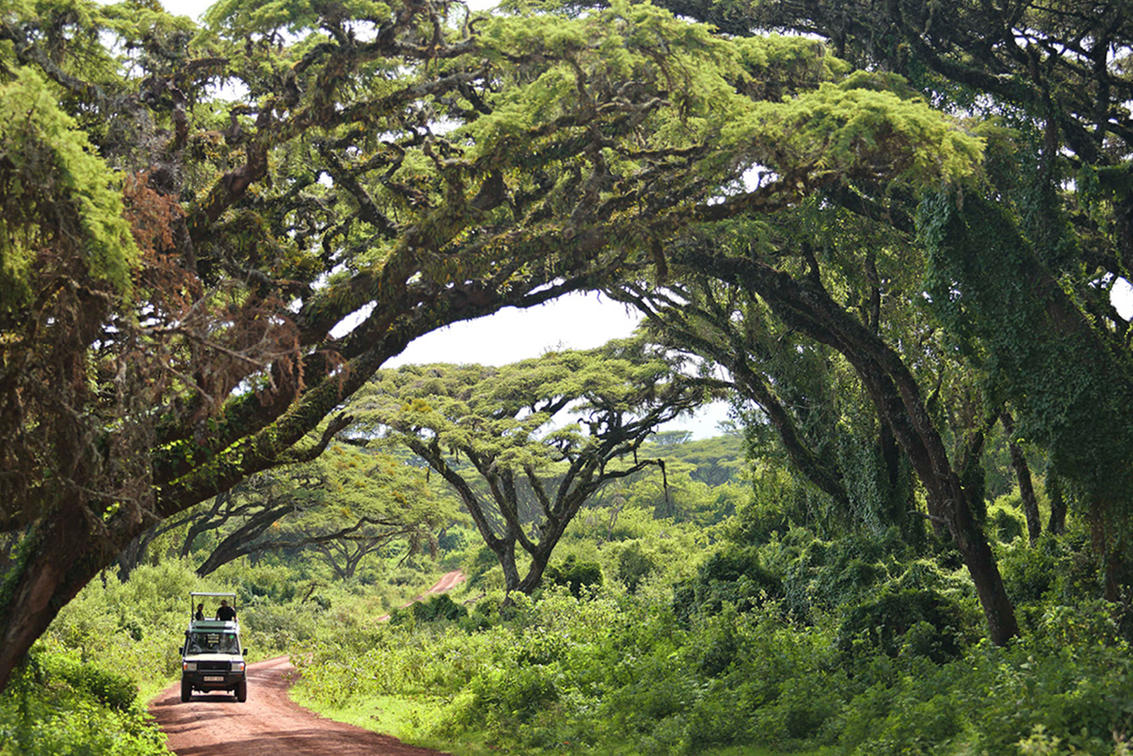
Ngorongoro Conservation Area
📍 Arusha Region · Northern TanzaniaThe world’s largest intact volcanic caldera — 264km² in area, 610m deep, sheltering one of Africa’s densest Big Five populations. The crater floor permanently supports 25,000+ large animals including black rhinos still surviving in open wilderness — a sight almost nowhere else can match. Nearby Olduvai Gorge has yielded 3.6-million-year-old hominid fossils.
Ngorongoro is Africa’s most reliable Big Five spot — the caldera walls act as a natural enclosure. Every single descent delivers lions, elephants, buffalo, hippos, and — if the conditions are right — the critically endangered black rhino. The crater rim at dawn, mist filling the bowl below you, is one of Africa’s finest sights.
🔴 Peak all dry months · 🟢 Year-round destination
Why Visit
The Ngorongoro crater descent is mandatory on any northern Tanzania circuit. The floor drive takes 4–6 hours and routinely delivers all Big Five in a single outing. The eastern rim viewpoint at sunrise — with the entire 264km² bowl glowing below, hippos visible as grey blobs in the crater lake — is one of the most dramatic natural panoramas in Africa. Combine with Olduvai Gorge (30 minutes from the crater rim) for context on why this landscape is called the Cradle of Mankind.

Tarangire National Park
📍 Manyara Region · Northern TanzaniaTanzania’s most underrated park — home to Africa’s largest elephant concentrations outside Botswana, scattered across a landscape dominated by ancient baobabs some over 1,000 years old. During dry season (June–October) over 3,000 elephants converge on the Tarangire River. Red-earthed termite mounds dot the plains, and 550+ bird species fill the fever trees and acacias — more than in any other park in the northern circuit.
When 3,000 elephants funnel toward the same river at dusk — families calling to each other across the dry plain, bulls sparring at the water’s edge, calves tumbling in the shallows — you understand why Tarangire is called the elephant capital of Tanzania. The baobab landscape at sunset turns the whole park into a painting.
🔴 Peak dry Jun–Oct · 🟢 Good Jan–Feb, Dec
Why Visit
Tarangire is the perfect northern circuit opener — less crowded than the Serengeti, more dramatically scenic in dry season, and featuring wildlife density that rivals anywhere in East Africa. The elephant families here are extraordinarily relaxed, often approaching vehicles within a few metres. The Silale Swamp holds permanent water and produces spectacular wildlife concentrations year-round. Over 550 bird species including the Ashy Starling, found only in Tanzania.
Lake Manyara National Park
📍 Manyara Region · Northern TanzaniaOne of Tanzania’s most compact and diverse parks — squeezed between the Great Rift Valley escarpment and an alkaline soda lake. Famous for tree-climbing lions (a behaviour documented only here and in Uganda’s Ishasha sector), flamingo flocks staining the lake shore pink, and a dense groundwater forest alive with baboons, blue monkeys, and over 400 bird species.
The combination of forest, lake, and escarpment packs more distinct ecosystems into 325km² than any other park in the northern circuit. A canopy walkway above the groundwater forest lets you look down on elephants moving through the undergrowth below.
Why Visit
Manyara usually appears as a half-day stop on the northern circuit, but staying longer rewards. The tree-climbing lions rest in acacia and fig trees along the lake shore — most visible midday. The hippo pool at the park entrance is one of Tanzania’s most accessible year-round wildlife viewing points, with up to 200 hippos in a single pod. The alkaline lake’s chemistry supports mass flamingo concentrations that turn the entire shoreline pink in good years.
Africa’s highest mountain at 5,895m — a free-standing volcanic massif rising from the surrounding savanna. No technical equipment required. Kilimanjaro is a trekking peak, accessible to fit walkers with the determination to reach the highest point on the continent.
Mount Kilimanjaro National Park
📍 Kilimanjaro Region · Northeast TanzaniaAfrica’s highest mountain and the world’s tallest free-standing volcanic massif — rising 5,895m above the surrounding savanna plains, capped by glaciers at the equator. Uhuru Peak on the crater rim is reachable by any fit walker on a 7–9 day guided trek through five distinct ecological zones: rainforest, heath, moorland, alpine desert, and arctic summit. No ropes, no crampons required below the summit — just fitness, acclimatisation, and determination.
Summit night begins at midnight from 4,700m. You climb in darkness for 6 hours, each step an effort, the stars impossibly bright above a sea of clouds. Then, at 5,895m at sunrise, the crater glaciers turn gold and the shadow of Kilimanjaro stretches across Tanzania to the horizon. No words land properly for it. You have to go.
🔴 Peak Jan–Feb, Jul–Oct · 🟢 Good Jun, Dec · Avoid Apr–May (heavy rain)
Choosing Your Route
Six main routes ascend Kilimanjaro. The route you choose determines your experience almost entirely — acclimatisation profile, scenery, and crowd levels vary dramatically.
What to Expect on Summit Night
Departure from Barafu Camp (4,673m) is at midnight. Temperature at the summit can reach -20°C. The final push to Uhuru Peak takes 6–8 hours. Most trekkers experience altitude headaches and nausea — this is normal. Descend to Mweka Camp the same day: a 12–14 hour total summit day. It is one of the hardest and most rewarding days of your life.
Combine With
Most climbers fly into Kilimanjaro International Airport and add a northern circuit safari afterwards — arriving exhausted at Serengeti or Ngorongoro and experiencing the wildlife from vehicle level after days at altitude is an extraordinary contrast.

Arusha & Mount Meru
📍 Arusha Region · Northern TanzaniaTanzania’s safari capital — Arusha is the hub from which almost all northern circuit trips depart. Arusha National Park, just 25km from town, shelters giraffes, buffalos, zebras, and flamingos around Momella Lakes, with Mount Meru (4,566m) towering above. The 3–4 day Meru trek is considered one of Africa’s finest mountain walks — and an excellent acclimatisation ascent before Kilimanjaro.
The Meru summit crater contains a violent landscape of lava flows and a volcanic ash cone still emitting sulphur — the caldera is one of East Africa’s most dramatic summit environments, and fewer than 5% of Kilimanjaro climbers ever make the detour.
Why Visit
Arusha National Park is one of Tanzania’s most overlooked parks — easily accessible from the city, it offers walking safaris among giraffe and buffalo, canoeing on Momella Lakes alongside flamingos, and forest walks to the base of Mount Meru’s dramatic crater walls. A perfect half-day addition to the start or end of a northern circuit safari.
One of the Indian Ocean’s most beguiling destinations — an archipelago where Swahili, Arab, Indian, and Portuguese cultures have layered over fifteen centuries into something wholly unique. The perfect bush-to-beach finale to any Tanzania safari.
Zanzibar — Stone Town & Beaches
📍 Zanzibar Region · Indian OceanAn archipelago where 1,500 years of Swahili, Arab, Indian, and Portuguese influence has created something completely unique. Stone Town (UNESCO World Heritage) is a labyrinth of carved coral-stone doorways, call-to-prayer echoes at dusk, and spice-market fragrances that drift over the dhow-filled harbour. The beaches of Nungwi and Kendwa (north) are some of the finest in Africa. Paje (east coast) is Africa’s premier kite-surfing destination. Mnemba Atoll Marine Reserve offers the best snorkelling and diving in East Africa.
Zanzibar is 90 minutes by air from the Serengeti. The bush-to-beach transition — waking among lions one morning and swimming in turquoise reef water the next — is one of the defining travel experiences in Africa. Stone Town’s rooftop restaurant at sunset, watching wooden dhows cross the harbour, is its own reward.
🔴 Peak Jan–Feb, Jul–Oct · 🟢 Good year-round · Avoid Apr–May (heavy rain)
Stone Town
Allow at least one full day in Stone Town before heading to the beaches. The UNESCO-listed old city rewards wandering without a plan — every alley leads somewhere unexpected. The Arab Fort (built 1699) sits at the waterfront and hosts open-air events on its ramparts. Freddie Mercury was born here in 1946; the house where he grew up still stands. The old slave market and Anglican Cathedral built on its site is one of the most sobering and important heritage sites in East Africa.

Pemba Island
📍 Pemba Region · North of ZanzibarThe diver’s island — Pemba’s near-vertical walls drop 800m into the Indian Ocean, sheltering some of the most pristine coral walls in Africa. Almost completely undeveloped, reached only by small aircraft or ferry. The island is covered in clove plantations — the fragrance is constant. One of East Africa’s most genuinely undiscovered destinations.
Pemba’s coral walls are among the most biodiverse in the Indian Ocean — Napoleon wrasse, hammerhead sharks, enormous Napoleon grouper, and walls carpeted in soft coral in colours that defy photography. Almost nobody goes. That is the point.
Why Visit
Pemba has resisted mass tourism by virtue of being inconvenient to reach. Fly from Zanzibar on Coastal Aviation (45 minutes) — there are no direct flights from Dar es Salaam. Two small lodges on the island mean exclusive access to the reefs. Best combined with 2–3 nights on Zanzibar as a diving extension.
Tanzania’s southern parks are the country’s greatest secret — vast, remote, uncrowded, and delivering wildlife experiences that rival the north in quality while hosting a fraction of the visitors. For serious safari-goers, the south is essential.
Nyerere National Park (Selous)
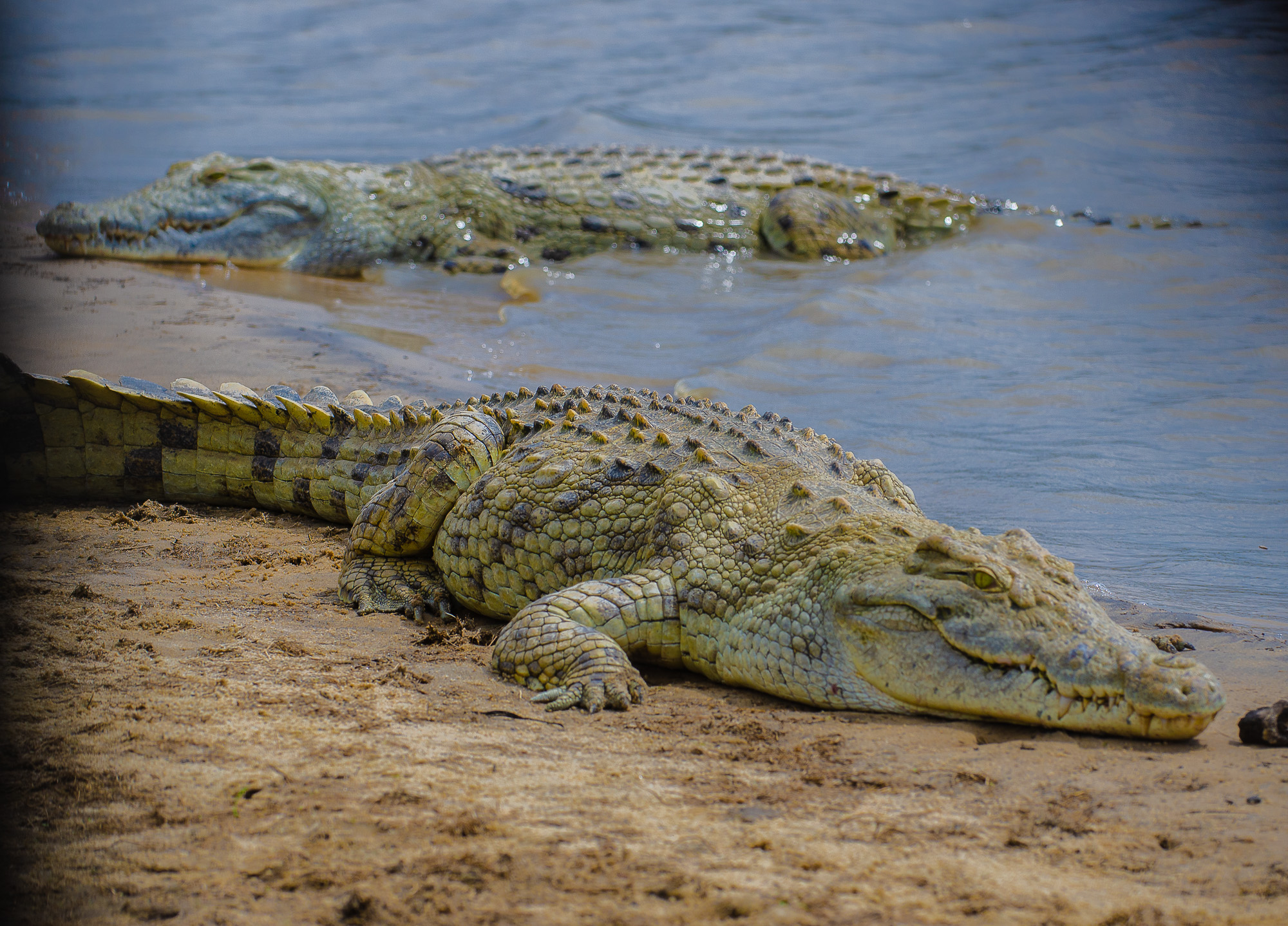
📍 Morogoro & Lindi Regions · Southern TanzaniaThe largest protected wilderness area in Africa at 54,600km² — five times the size of the Serengeti. The Rufiji River, Lake Manze, and extensive sand rivers create a unique aquatic safari landscape accessed by boat, on foot, and by vehicle. Nyerere shelters Africa’s largest wild dog population, enormous crocodile concentrations, 440+ bird species, and some of the continent’s most remote camp experiences.
A morning boat safari on Lake Manze — drifting past pods of 200 hippos, watching a crocodile launch itself at an impala, with elephants wading in the shallows and a fish eagle calling overhead — is a completely different kind of safari from anything the north delivers. You move through it, not just alongside it.
🔴 Peak dry Jun–Oct · Park partially closes Apr–May
Why Visit
The vast majority of Nyerere is inaccessible to tourists — only the northern corner around the Rufiji River and its lakes is open. This means extraordinary wildlife density in a very small visitor area, creating sightings of remarkable intimacy. Wild dog packs den here in the dry season and are among the most reliably seen anywhere in Africa. Fly-in camps on the Rufiji River deliver the most exclusive southern Tanzania experience.

Ruaha National Park
📍 Iringa Region · Central TanzaniaTanzania’s largest national park and one of Africa’s finest safari secrets — sheltering East Africa’s largest recorded lion population alongside wild dogs, cheetahs, and rare antelope species (roan, sable, and greater kudu) found nowhere in the northern circuit. The Great Ruaha River, lined with baobabs and ancient fig trees, draws extraordinary wildlife concentrations through the dry season.
Ruaha consistently produces the finest lion experiences in East Africa — multi-pride sightings of 20+ lions are not unusual in dry season. Exclusive camps with 6–8 guests deliver complete privacy. You can watch the same pride hunt all morning and never see another vehicle.
🔴 Peak dry Jun–Oct
Why Visit
Ruaha is the destination for those who’ve done the northern circuit and want something more exclusive, more challenging, and more wild. The roan and sable antelope — elegant, horse-sized, and rare — are absent from every other park in northern Tanzania. Wild dog packs den here in the dry season. The Great Ruaha River at low water in October, when everything concentrates around its remaining pools, delivers the most intense wildlife experience in the country.

Mahale Mountains National Park
📍 Kigoma Region · Lake Tanganyika · Western TanzaniaThe world’s most extraordinary chimpanzee destination — a remote forested mountain range rising directly from the shores of Lake Tanganyika, Africa’s deepest lake. After trekking with habituated chimps in pristine forest, you swim in crystal-clear freshwater that extends 1,470m below your feet. Accessible only by boat from Kigoma or by small aircraft. No roads reach Mahale. The most exclusive park in Tanzania.
The combination exists nowhere else on earth — track wild chimpanzees through forest that touches the lake shore in the morning, then snorkel over schools of endemic cichlid fish in Africa’s clearest water in the afternoon. Mahale is two extraordinary experiences in one utterly remote location.
🔴 Peak Jun–Sep (dry, best chimp tracking) · Closed Mar–May
What to Expect
Getting to Mahale is the adventure in itself. Fly to Kigoma from Dar es Salaam, then take a 3–4 hour boat along the lake shore — a journey of extraordinary beauty with forest running down to the water’s edge. Alternatively, fly direct from Arusha via charter to the park’s airstrip (2.5 hours). The single luxury camp on the lake shore has just 8 bandas — making Mahale one of the most exclusive destinations in Africa.

Katavi National Park
📍 Katavi Region · Southwest TanzaniaTanzania’s most remote national park — and arguably its most dramatic. In the dry season (June–October), the floodplains contract to a series of shallow pools where thousands of hippos and crocodiles compete for shrinking water. Up to 200 hippos crammed into a pool no larger than a tennis court, fighting, roaring, and climbing over each other — it is one of Africa’s most visceral wildlife spectacles.
Katavi’s dry season hippo concentrations are more extreme than anywhere else in Africa. When 200 hippos are forced into a muddy pool 20 metres wide, the noise, the aggression, and the sheer biomass on display is unlike anything you’ve ever seen.
Why Visit
Katavi is reached by light aircraft from Arusha or Mahale and is almost always combined with Mahale as part of the western Tanzania wilderness circuit. Buffalo herds of 1,000+ move across the floodplain in columns. Lion prides shadow the buffalo. Very few visitors, no permanent lodge infrastructure — fly camps only. Best combined with Mahale for a 7–10 day western Tanzania experience.
Ready to Plan Your Tanzania Trip?
The Serengeti crossing season (Aug–Oct) books out 6–12 months ahead. Mahale and Ruaha camps have just 6–8 guests each. Tell us your dates and we’ll handle everything — all quoted in KES.