Morocco — Where Africa Meets Arabia
Spice markets and ancient medinas, Saharan dunes rolling to the horizon, Atlas mountain passes dusted with snow, and Atlantic ports fragrant with salt and grilled fish. Morocco is the most cinematically beautiful country in Africa — and one of the easiest to explore from Nairobi.
Morocco’s four imperial cities each preserve a living medieval world of souks, riads, mosques, and craft traditions unchanged since the 12th century. Each one is different; each one is worth several days.

Marrakech
📍 Marrakech-Safi Region · Central MoroccoSnake charmers, acrobats, henna artists, and storytellers fill the Djemaa el-Fna from mid-morning until past midnight — a living UNESCO Intangible Heritage site that performs differently every day. By day the souk labyrinth channels you through copper-hammers and saffron bins; by night the food stalls turn the square into the greatest open-air kitchen on earth.
What to Do
Allow 3–4 nights minimum. Hire a local guide for the first souk morning — the 9,000 alleys are genuinely disorienting and a guide unlocks access the tourist trail misses entirely. The Palais Bahia, the Saadian Tombs, and the Majorelle Garden (Yves Saint Laurent’s vivid blue sanctuary) are the three unmissable non-souk stops.

Fes el-Bali
📍 Fes-Meknes Region · North MoroccoThe world’s largest medieval city still functioning as it did in the 9th century. Nine thousand alleyways, 360 mosques, and the Chouara Tannery — where leather has been worked in the same stone honeycomb vats for over 1,000 years. Fes is Morocco’s intellectual soul: more serious, more medieval, more intense than Marrakech.
Getting Around
The medina requires a local guide — it is not false modesty to say 9,000 alleys cannot be navigated by map alone. Hire from your riad. Stay minimum 2 nights inside Fes el-Bali. The Bou Inania Madrasa and the Al-Qarawiyyin Mosque (founded 859 AD — the world’s oldest operating university) are the essential architecture stops.
Chefchaouen
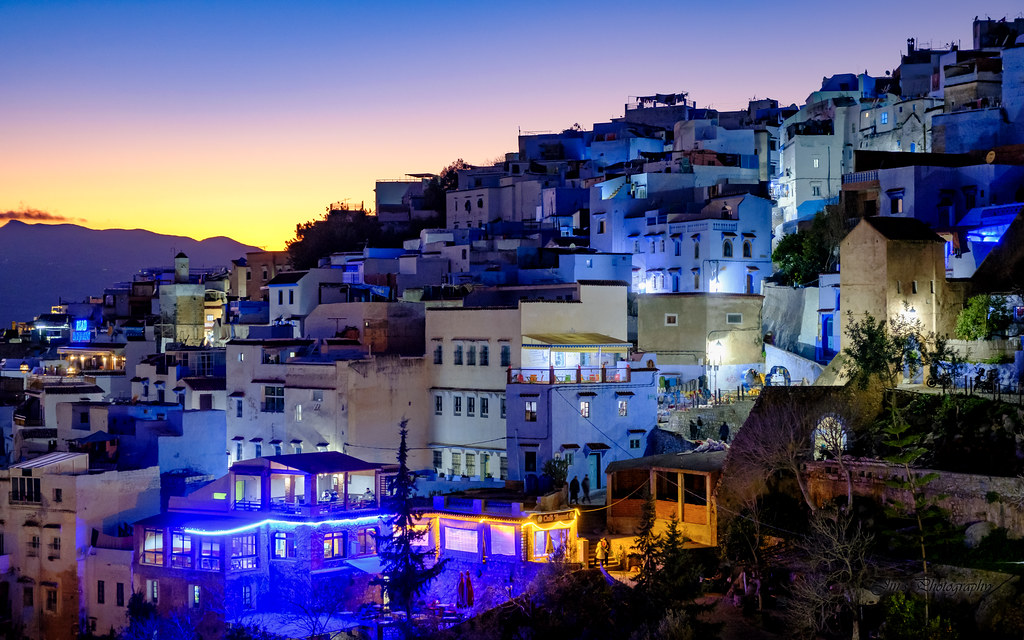
📍 Tanger-Tetouan Region · Northern MoroccoA mountain village painted entirely in shades of blue, tumbling down the Rif Mountains in a cascade of indigo, cobalt, and powder-blue alleys. Founded by Jewish and Moorish refugees from Andalusia in the 15th century. The cool mountain air, the quality of the afternoon light, and the extraordinary craft shops make it impossible to leave in a hurry.
What to Do
Stay at least 2 nights. The Akchour waterfall hike (2.5 hrs each way from the Rif park entrance) is one of Morocco’s finest half-day walks — through cedar forest along a river gorge to a tiered waterfall. The medina is small enough to learn in an afternoon. Buy Berber rugs and woven textiles here rather than Marrakech — the prices and quality are better.
Beyond the medinas lies Morocco’s greatest natural drama — the Saharan dunes of Erg Chebbi, the Toubkal high Atlas, and the kasbahs of the ancient trans-Saharan gold and salt routes.

Merzouga & Erg Chebbi Dunes
📍 Draa-Tafilalet Region · Southeastern MoroccoThe dunes of Erg Chebbi rise up to 150 metres from a flat gravel plain — rust-red at noon, deep orange at dusk, and almost black in the hour before dawn when you start climbing. A camel caravan at sunset to a desert camp, dinner cooked over open fire, then the stars. No city light within 200km means a sky you will genuinely not believe until you see it.
Getting There & What to Expect
The classic route from Marrakech drives south via the Dades and Todra gorges, arriving in Merzouga in 3 days — this is one of Morocco’s finest road trips and not to be rushed. One-night desert camp minimum; two nights is better. Luxury camps have proper en-suite tents with beds; traditional Berber camps have bedrolls on rugs. Both work. The camels are slower than you expect — about 40 minutes to reach camp from the dunes edge.
High Atlas & Toubkal
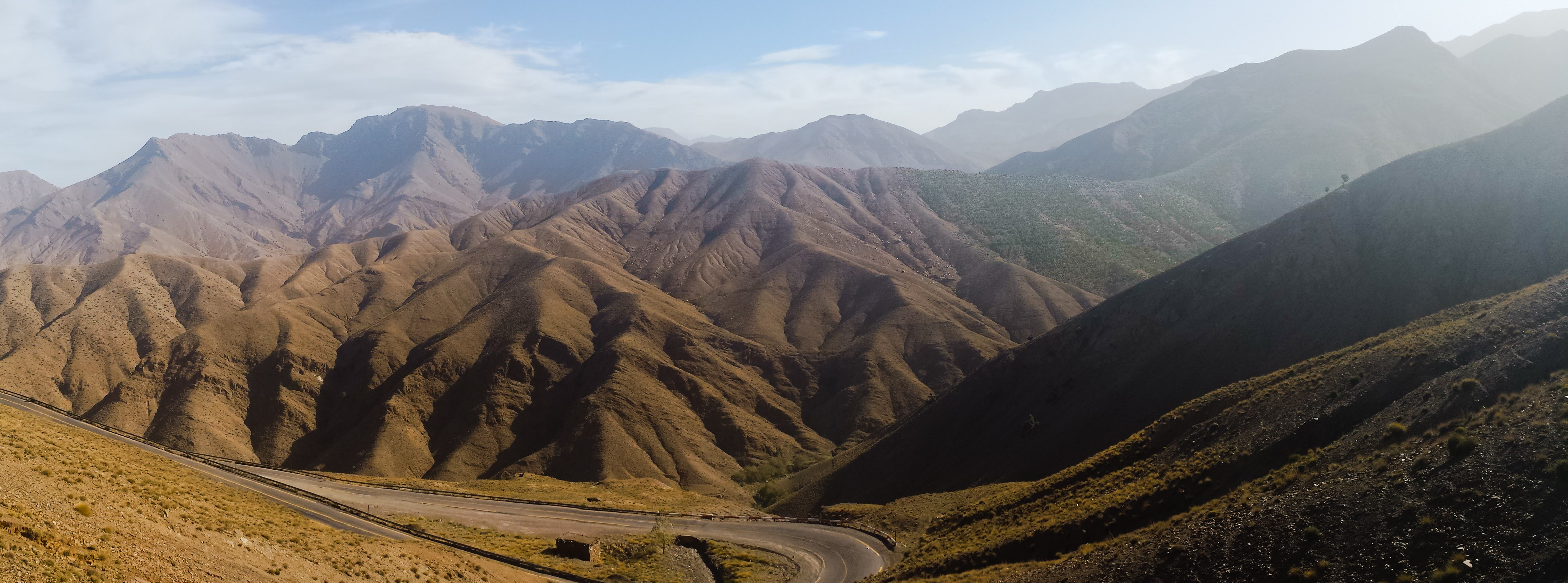
📍 Marrakech-Safi Region · South of MarrakechThe High Atlas rises dramatically from Marrakech’s edge — a world of snow-capped ridges, packed-mud Berber villages, walnut groves, and rose valleys. Jbel Toubkal at 4,167m is North Africa’s highest peak, reachable in 2 days without any technical equipment. The Ourika Valley provides a half-day forest escape just 35km from the city.
Toubkal Summit Trek
Day 1: Drive Marrakech to Imlil village (1.5 hrs), hike to Toubkal Refuge (3,207m) — 5 hrs. Day 2: Summit attempt (4,167m) at dawn — 4 hrs up, 3 hrs down. Return to Marrakech same day. Total cost with guide and refuge: ~KES 18,000 per person. No technical equipment needed Jun–Sep. Crampons required Oct–May.

Aït Benhaddou
📍 Draa-Tafilalet · Pre-Saharan RouteThe finest ksar — fortified mud-brick city — in Morocco. A UNESCO World Heritage Site rising from rust-red earth, unchanged from the trans-Saharan trade era. Used as a film set in Gladiator, Lawrence of Arabia, and Game of Thrones. A natural stopping point on the Marrakech-to-Sahara road journey, and worth an overnight to see it at dawn before the tour buses arrive.
Logistics
Aït Benhaddou is 32km from Ouarzazate on the Marrakech–Merzouga highway — a natural overnight stop on the 3-day Sahara road trip. Cross the shallow river on foot (or by stepping stones) to enter the ksar. Climb to the summit granary for panoramic views. The working families who still live inside the walls sell excellent saffron and argan oil at fair prices.
Todra & Dades Gorges
📍 Draa-Tafilalet · Southeast MoroccoTwo of Morocco’s most dramatic geological spectacles en route to the Sahara. The Todra Gorge narrows to 10 metres wide with walls 300m high — a river runs along the floor and climbers ascend the vertical faces. The Dades Gorge winds through formations nicknamed the “monkey toes” — red rock eroded into organic shapes unlike anywhere else in North Africa.
How to See Both
Drive the Dades Gorge road in the morning (the light hits the “monkey toes” formations best before noon), then continue east to the Todra narrows in the afternoon — 1.5 hrs between the two. Stay overnight at a small guesthouse inside the Todra narrows — the gorge at night, lit only by stars, is extraordinary. Continue to Merzouga the following morning.
Morocco’s Atlantic coast is a different country again — windswept, salty, bohemian. Fortified port towns, kite-surfing beaches, and the most relaxed food scene in North Africa.

Essaouira
📍 Marrakech-Safi Region · Atlantic CoastMorocco’s most relaxed city — a UNESCO-listed Atlantic port of blue-painted fishing boats, white ramparts, and a constant ocean wind that drew Jimi Hendrix in 1969 and has never let the place take itself too seriously since. Gnawa musicians play trance music descended from sub-Saharan Africa in the medina squares. The fresh fish at the harbour stalls, grilled to order, is one of Morocco’s great cheap meals.
What to Do
2 days here feels right — not rushed, not too long. Walk the ramparts at sunset (free), eat sardines at the port stalls for breakfast (under KES 300), browse the woodworking shops for thuya-wood crafts that Essaouira is specifically known for. The beach south of town is Africa’s premier kite-surfing destination — the Alizée wind is constant and reliable from April–September.
Casablanca & Rabat
📍 Atlantic Coast · North MoroccoMost visitors pass through Casablanca without stopping — a mistake. The Hassan II Mosque is the world’s seventh-largest mosque and one of the few in Morocco non-Muslims may enter: its minaret, at 210m, is the tallest religious structure in the world. Rabat, the capital, has four UNESCO sites and one of Morocco’s finest medinas, entirely without tourist crowds.
One Day in Casablanca
Hassan II Mosque guided tours run daily except Friday (English guides available, ~KES 1,800). The Corniche west of the mosque is a pleasant 2km waterfront walk. Casa Voyageurs train station connects directly to Rabat (45 min), Fes (4 hrs), and Marrakech (3 hrs). If arriving at Mohammed V Airport, a half-day mosque visit before connecting south is easy to arrange.
Ready to Plan Your Morocco Circuit?
Imperial cities, Saharan dunes, Atlantic coast, Atlas mountains — Morocco rewards those who combine them into a proper circuit. We build itineraries that flow naturally and use time well, all quoted in KES.