South Africa — Where Worlds Meet
South Africa packs more variety per square kilometre than almost any country on earth — a mother city beneath a flat-topped mountain, penguins on a pristine peninsula, world-class wine valleys, the continent’s greatest safari park, and 2,500km of dramatic coastline.
Consistently voted the world’s most beautiful city. Cape Town sits between Table Mountain and the Atlantic in a setting of extraordinary drama — world-class food, wine, history, and adventure stacked one on top of the other.

Table Mountain
📍 Cape Town · Western CapeThe most recognisable silhouette in Africa — 3km of flat sandstone rising 1,086m above Cape Town, visible 200km out to sea. The rotating cable car takes 5 minutes and delivers panoramic views of the city, two oceans, and the Cape Peninsula. The 2,000+ endemic plant species on the summit form part of the Cape Floral Kingdom — the richest plant diversity per unit area on earth.
The “tablecloth” — a rolling cloud that spills over the summit edge and evaporates in the warm air below — is one of earth’s great natural spectacles. It only happens on certain days, and when it does, standing inside it as the city disappears below is genuinely otherworldly.
Getting Up
Cable car runs daily (weather permitting) — book tickets online to skip queues. Last car down at 5–6pm depending on season. The Platteklip Gorge trail (2 hrs up) is signposted and straightforward; descend by cable car for the views.
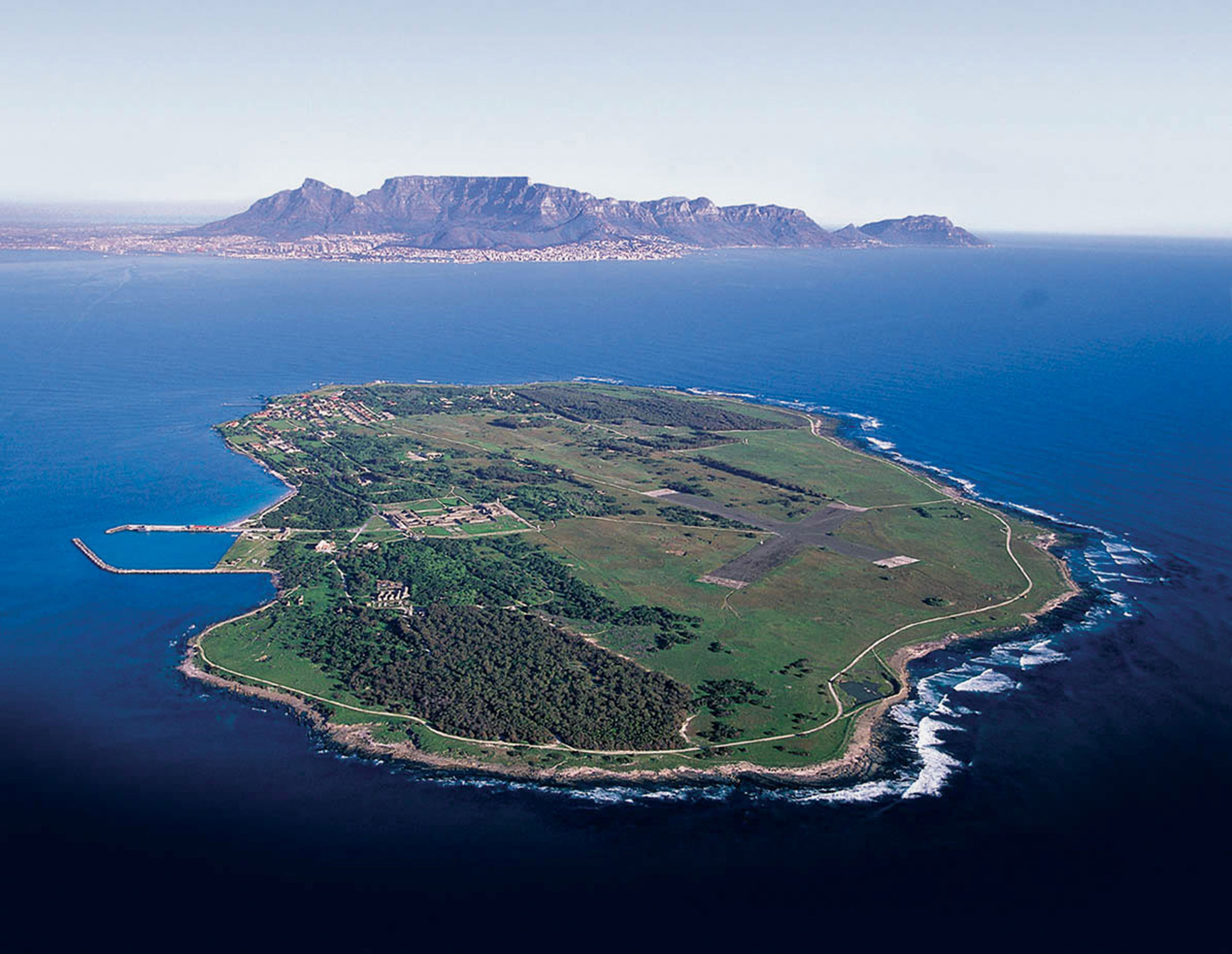
Robben Island
📍 Table Bay · 11km from WaterfrontNelson Mandela spent 18 of his 27 years of imprisonment in a 4.5m² cell on this windswept island. Today, tours are led by former political prisoners — they guide you through the Maximum Security Prison, Mandela’s own cell, and the lime quarry where prisoners worked in the sun. One of the most powerful heritage sites in Africa.
Hearing a former prisoner point to the wall of his own cell and describe his incarceration is not a museum experience — it’s something harder and more important. Also: 3,000 African penguins live on the island.
Getting There
Ferries depart from the V&A Waterfront Nelson Mandela Gateway. Tour runs ~3.5 hrs including ferry. Book well in advance — tickets sell out weeks ahead in peak season.
A 70km peninsula of dramatic cliff, fynbos shrubland, and white sand beaches extending to Africa’s southwestern tip. The full-day circuit is one of the world’s great scenic drives.
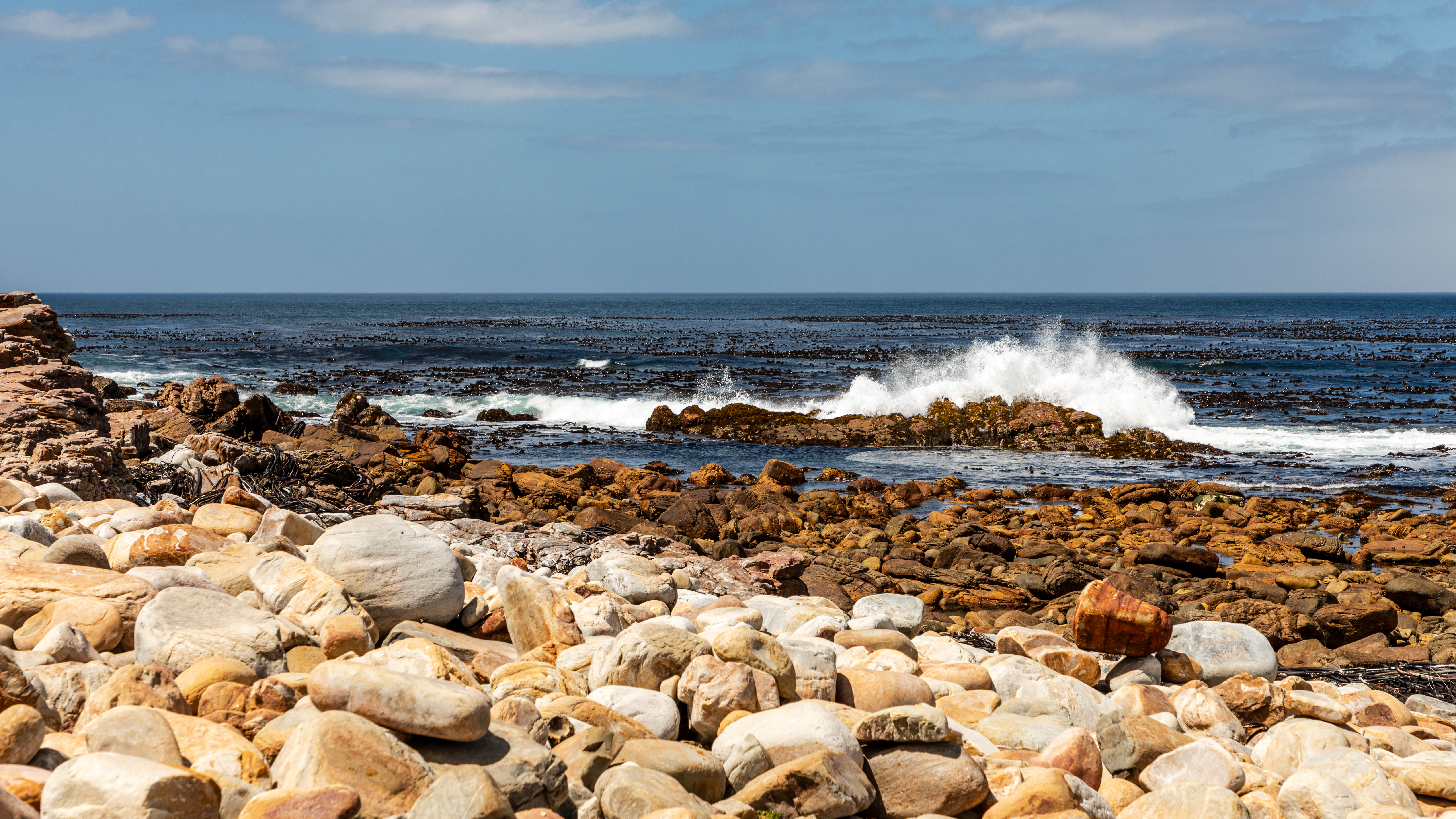
Cape Peninsula
📍 Western Cape · South of Cape TownThe full circuit covers Hout Bay (seal colony boat trip), Chapman’s Peak Drive — 9km of coastal road carved into a sheer cliff — Boulders Beach where 3,000 African penguins wander among visitors on a white-sand cove, Cape Point lighthouse with views over the meeting of two oceans, and the Cape of Good Hope itself.
Boulders Beach. You walk down wooden boardwalks onto a sheltered cove and find penguins — hundreds of them — sitting everywhere within arm’s reach. They evolved here without land predators and have zero fear of people. You can sit cross-legged on the sand and one will waddle over to investigate.
The Route
Drive south via Hout Bay and Chapman’s Peak, stop at Boulders Beach (Simon’s Town) in mid-morning, continue to Cape Point by midday, walk to the lighthouse, then return via the other coast. Allow 8–9 hours with stops.

Kalk Bay & False Bay
📍 False Bay · 30 min from Cape TownCape Town’s most character-filled village — a working fishing harbour with antique shops, independent bookshops, cave walks, and restaurants perched directly over the ocean. Between July and November, southern right whales breach in False Bay metres from the clifftop. Great white sharks cage dive is available year-round at nearby Gansbaai.
The whales. Between July and November, southern right whale mothers and calves rest in the calm of False Bay — visible from the road, from cafes, from everywhere along the shore. No boat required.
Whale Season
Southern right whales arrive in Walker Bay and False Bay July–November to calve. Hermanus (1 hr from Cape Town) has the world’s best land-based whale watching and a dedicated whale crier who blows a kelp horn when whales are spotted.
45 minutes from Cape Town, valleys of vine-covered slopes ringed by jagged mountain peaks, dotted with Cape Dutch farmsteads from the 17th century. One of the world’s most beautiful wine regions.
Franschhoek
📍 Western Cape · 1 hr from Cape TownFounded by French Huguenot refugees in 1688 — the name means “French Corner” — Franschhoek’s single main street has a concentration of world-class restaurants rivalling any wine town on earth. The valley itself is gorgeous: a tight mountain amphitheatre, vineyards from floor to ridge, and Cape Dutch manor houses gleaming white against the dark peaks.
The Franschhoek Wine Tram — a hop-on-hop-off tram and bus that loops between wine estates — lets you taste your way through the valley without driving. Some of Africa’s finest wine, served in settings of extraordinary architectural beauty.
How to Do It
Stay 2 nights — one day for the Wine Tram circuit, one day for the village itself and a long lunch at Haute Cabrière or The Tasting Room. February harvest festival (La Fête de Franschhoek) is the finest time to visit.
Stellenbosch
📍 Western Cape · 45 min from Cape TownSouth Africa’s oldest university town — a leafy grid of Cape Dutch and Georgian architecture shaded by 300-year-old oak trees. The Stellenbosch wine route has 200+ estates. Spier, Tokara, and Simonsig are standouts. The town itself rewards wandering: Dorp Street is one of South Africa’s most beautifully preserved historic streetscapes.
Tokara’s hilltop restaurant serves food grown on the estate with views over Stellenbosch Valley and, on clear days, Table Mountain. Few lunch settings in the world beat it.
Getting Around
Stellenbosch is best explored on bicycle — the town centre and nearby estates are all accessible on two wheels. Rent from one of several bike shops on Church Street. Self-drive wine routes are well-signposted.
19,485km² of pristine bushveld with the highest concentration of wildlife species anywhere in Africa. The only major African park offering genuine self-drive safaris — and surrounded by private concessions where walking safaris and night drives are possible.

Kruger National Park
📍 Limpopo & Mpumalanga · Northeast South Africa147 mammal species, 507 bird species, and the most reliable Big Five sightings on the continent. The park runs 360km north to south — the north is remoter and drier, the south is where most wildlife concentrations are. Lions, leopards, elephants, buffalo, and rhinos are all seen on most game drives. Unlike parks in Kenya or Tanzania, you can drive yourself.
Sabi Sands Game Reserve, adjoining Kruger’s western fence with an open boundary, has the most reliable leopard sightings in Africa. Guides locate them daily. You sit 3 metres from a leopard in a tree, engine off, no other vehicles. That’s the standard here, not the exception.
National Park vs Private Reserve
The national park is self-drive and affordable — stay in SANParks rest camps. Private reserves (Sabi Sands, Timbavati, Klaserie) are all-inclusive with night drives, walking safaris, and exclusive wildlife access. For the best leopard and wild dog sightings, go private. For flexibility and value, self-drive Kruger.
Panorama Route & Blyde River Canyon
📍 Mpumalanga · En Route to KrugerThe scenic drive linking Johannesburg to Kruger — past the Blyde River Canyon (the world’s third largest, and the largest “green” canyon), God’s Window viewpoint over the lowveld, Bourke’s Luck Potholes, and the Three Rondavels rock formation. An easy 2-day route that transforms the Kruger drive into one of South Africa’s finest road trips.
God’s Window on a clear morning — you stand at the escarpment edge at 1,730m and look down over a 1,000m drop into the tropical lowveld stretching to Mozambique. One of the most dramatic viewpoints in southern Africa.
The Route
Drive Johannesburg → Graskop (first night) → God’s Window → Bourke’s Luck → Blyde Dam viewpoint → Hoedspruit → Kruger. Allow 2 days for the full scenic circuit before entering the park.
300km of coastal highway between Mossel Bay and Port Elizabeth — ancient indigenous forest, pristine beaches, lagoons, and the world’s highest bungee jump. South Africa’s most celebrated road trip.

Garden Route — Knysna to Tsitsikamma
📍 Western & Eastern CapeKnysna’s turquoise lagoon flanked by twin sandstone Heads is South Africa’s most photographed scene after Table Mountain. Tsitsikamma National Park has the continent’s finest suspension bridge canopy walk through 800-year-old yellowwood trees. Bloukrans Bridge (216m) hosts the world’s highest commercial bungee jump. Sedgefield’s Saturday Slow Market is one of South Africa’s finest.
The Storms River Mouth suspension bridge in Tsitsikamma — 77m above the river gorge, swaying slightly, looking down through ancient forest to the emerald water far below. On a calm morning you can hear the sea and the forest at the same time.
How Long
Allow 4–5 days for the full route. Fly into George or Cape Town (then drive). Key stops: Wilderness (night 1), Knysna (nights 2–3), Plettenberg Bay (night 4), Tsitsikamma (night 5).
Oudtshoorn & The Karoo
📍 Klein Karoo · Inland from Garden RouteThe ostrich capital of the world — Victorian-era “feather palaces” built when ostrich feathers were worth their weight in gold still line Oudtshoorn’s main road. The Cango Caves (25 million years old, 4km long) are the finest show caves in Africa. The semi-desert Karoo beyond stretches to the horizon in colours that shift from orange to purple at dusk.
The Cango Caves Adventure Tour — crawling through gaps in ancient limestone formations 25 million years old, 30m underground. Not for the claustrophobic, but completely unlike anything else in the country.
Getting There
Oudtshoorn sits over the Outeniqua Mountains from George — 60km inland. The Swartberg Pass to Karoo Poort is one of South Africa’s most dramatic mountain drives. Combine with 2 nights on the Garden Route as an inland detour.
A 1,000km escarpment of dramatic basalt peaks, deep gorges, and ancient San Bushman cave paintings — UNESCO listed. The Amphitheatre at Royal Natal is one of the world’s great natural spectacles.
Drakensberg — Amphitheatre & Royal Natal
📍 KwaZulu-Natal · Eastern South AfricaThe Amphitheatre is a 5km sheer basalt cliff rising 1,200m above the valley floor — one of earth’s great vertical walls. The Tugela Falls cascade 948m down its face in five steps, making them the world’s second-highest waterfall. San Bushman cave paintings — thousands of them, sheltered in rock overhangs throughout the range — depict hunts, dances, and spiritual visions in remarkable condition.
The cave paintings in the Giants Castle area were made by San people over 3,000 years. Inside the rock shelters, eland, hunters, and shaman figures painted in ochre and charcoal still glow in the half-light. You read them with a guide who explains each image. No barriers, no glass — just the art and the silence.
Key Areas
Northern Berg (Royal Natal NP) for the Amphitheatre. Central Berg (Giants Castle) for the finest cave paintings and lammergeier vultures. Southern Berg (Sani Pass) for the dramatic 4×4 road into Lesotho. Each area warrants 2 nights minimum.
iSimangaliso Wetland Park
📍 KwaZulu-Natal · Zululand CoastSouth Africa’s first UNESCO World Heritage Site — 220km of pristine coastline where hippos walk on the beach at night, crocodiles share lagoons with leatherback turtles nesting in the sand, and whale sharks cruise offshore seasonally. One of the most extraordinary concentrations of wildlife on any coastline in the world.
Leatherback and loggerhead turtles nest on the beaches at St Lucia and Cape Vidal between November and February. Guided night walks with rangers who locate the nesting females — and watch them emerge from the sea, lay, and return to the ocean — is one of South Africa’s most moving wildlife experiences.
When to Go
Turtle season: November–February (nesting) and January–March (hatching). Whale sharks: October–March. St Lucia town is the main base — boat safaris depart daily on the St Lucia Estuary (hippos, crocs, birds).
Ready to Plan Your South Africa Trip?
Cape Town + Winelands + Kruger + Garden Route — or combine with Kenya, Tanzania, or Zimbabwe for the ultimate southern Africa circuit. All quoted in KES. We handle every detail.