
Egypt — Cradle of Civilisation
No country wears its history as visibly as Egypt. Pyramids built 4,500 years ago with a precision that still baffles engineers, pharaoh tombs painted in pigments still vivid, a river that made a civilisation and still flows through it. Add the Red Sea’s coral reefs and Egypt delivers two completely different worlds.
Twenty million people, one river, and the only surviving Wonder of the Ancient World visible from the city’s edge. Cairo is overwhelming and extraordinary in equal measure.

The Pyramids of Giza & the Sphinx
📍 Giza Governorate · Cairo’s EdgeThe Great Pyramid of Khufu has been the tallest man-made structure on earth for 3,800 of its 4,500 years. Standing at its base, the scale becomes real: each limestone block weighs 2.5 tonnes and there are 2.3 million of them, stacked with a precision of 2.3 centimetres across 230 metres. The Great Sphinx faces east and has been watching the sun rise over the desert for longer than most civilisations have existed.
What to Know
Arrive at opening time (8am) — the plateau is almost empty before 9:30am. Interior entry to the Great Pyramid is a separate ticket (~KES 1,800) and worth every shilling. The Solar Boat Museum beside the pyramid displays a 4,600-year-old cedar boat found dismantled in a pit at the base — extraordinary condition and extraordinary scale.

Islamic Cairo & Khan el-Khalili
📍 Historic Cairo · City CentreA UNESCO World Heritage district of medieval mosques, minarets, and bazaars packed into a grid of lanes that haven’t changed structurally in 600 years. Khan el-Khalili — Cairo’s great souk, operating since 1382 — sells spices, silver, papyrus, and perfume in the same lanes where merchants traded with Venice. The Ibn Tulun Mosque (879 AD) is Cairo’s oldest intact mosque and one of the finest in the Islamic world.
How to See It
Hire a local guide for the first morning — the district rewards those who understand what they are looking at. The Egyptian Museum on Tahrir Square (old building, now supplementary to the Grand Egyptian Museum) still houses remarkable pieces including Tutankhamun’s original mummy. Allow 3 full days in Cairo — it cannot be done in less.
The greatest concentration of ancient monuments on earth. Luxor was Egypt’s most important city for 1,500 years — both banks of the Nile are layered with temples, tombs, and mortuary complexes that dwarf anything elsewhere in the ancient world.
Valley of the Kings
📍 West Bank · LuxorSixty-three royal tombs cut into limestone cliffs on the Nile’s west bank, where pharaohs of the New Kingdom buried themselves in painted chambers meant to last eternity. The paintings — hunting scenes, gods, astronomical charts, hieroglyphic prayers — are still vivid after 3,200 years. Tutankhamun’s small tomb is the most famous; Seti I’s is the most beautiful, 130 metres deep with ceiling paintings of extraordinary delicacy.
Planning Your Visit
Standard ticket admits you to three tombs. Tutankhamun, Ay, and Ramesses V/VI require separate additional tickets. Start at 6am when it opens — the valley heats to 45°C by 11am and becomes uncomfortable. A half-day on the west bank combines Valley of the Kings, Hatshepsut Temple, and the Colossi of Memnon naturally. Add a hot air balloon flight over the valley at dawn (separate booking, ~KES 18,000) for an extraordinary perspective.
Karnak Temple Complex
📍 East Bank · LuxorBuilt and expanded over 2,000 years by 30 successive pharaohs, Karnak is the largest religious building complex ever constructed — 250 acres of temples, pylons, obelisks, and sacred lakes. The Hypostyle Hall alone contains 134 columns 21 metres tall, carved with painted reliefs that tell the story of Egypt’s greatest dynasties in stone that has lasted 3,300 years.
What to See
The complex takes 2–3 hours to walk properly. Don’t miss the Sacred Lake (the priests bathed here daily), the obelisks of Hatshepsut (the tallest surviving obelisk in Egypt at 29m), and the Avenue of Sphinxes that connects Karnak to Luxor Temple 3km away — recently excavated and now walkable in its entirety.
Luxor Temple
📍 East Bank Corniche · LuxorUnlike Karnak, Luxor Temple sits right in the city — medieval mosques and a Roman chapel were built inside its courts over the centuries, layering 3,000 years of religious history in a single enclosure. At night, fully floodlit on the Nile Corniche, it is arguably the most beautiful ancient monument in Egypt. The two seated Ramesses statues at the entrance are some of the finest sculptures from the ancient world.
Tips
Open until 9pm daily. Evening admission is the same price as daytime (~KES 1,500) and the experience is dramatically better. Combine with a Corniche sunset walk and dinner at one of the Nile-view restaurants for a perfect Luxor evening. The Luxor Museum, a short walk north, is small but houses some of the finest pieces from the region — less crowded than Cairo’s Egyptian Museum and better curated.
Egypt’s most atmospheric city — where Nubian culture, ancient granite, and the eternal Nile create a gentler, more human-scaled Egypt. The gateway to Abu Simbel, Ramesses II’s most audacious statement in stone.
Aswan
📍 Aswan Governorate · Southern EgyptThe Nile at Aswan is wider, slower, and more beautiful than at Cairo. Granite boulders split the current into channels between palm-fringed islands; feluccas tack silently across the river at dusk. The Philae Temple — dedicated to the goddess Isis, rescued stone by stone from rising Nile waters in the 1970s — sits on its own island, reached by boat. The Nubian villages on Elephantine Island maintain a distinct culture and colourful architecture found nowhere else in Egypt.
What to Do in Aswan
Allow 2–3 nights. The Philae Temple boat trip takes half a day — boats depart from the Shellal dock south of the High Dam. The Unfinished Obelisk (still lying in its granite quarry, abandoned mid-carve 3,500 years ago) is a 20-minute visit but deeply fascinating — it shows exactly how the ancients carved stone. The Nubian Museum beside the Cataract Hotel is one of Egypt’s finest small museums.
Abu Simbel
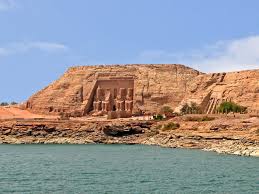
📍 Aswan Governorate · 290km South of AswanTwo rock-cut temples carved from a cliff by Ramesses II 3,200 years ago — the main temple faced east so that sunlight would illuminate the innermost sanctuary twice a year on the king’s birthday and coronation day. When the Aswan High Dam threatened to flood them in the 1960s, UNESCO dismantled and moved the entire complex 65 metres higher, stone by stone. The engineering miracle of saving it rivals the miracle of building it.
How to Visit
Fly from Aswan (45 min, first departure ~6am) — the road convoy option takes 3 hrs each way through desert and is not worth it. Most flights allow 2–3 hours at the site, which is enough. Go inside both temples — the smaller one (Nefertari’s temple) is less visited and has extraordinary painted reliefs. The Sound & Light show in the evening is excellent for those staying overnight in Abu Simbel village.

Nile Cruise — Luxor to Aswan
📍 Upper Egypt · 200km of RiverThe 4–7 day cruise between Luxor and Aswan stops at temples — Edfu, Kom Ombo, Esna — that most overland visitors skip entirely. The Edfu Temple (dedicated to Horus) is the best-preserved temple in Egypt. Kom Ombo, shared between two gods (Sobek the crocodile and Horus the falcon), sits right on the river bank with the Nile flowing past as you walk through it.
Options & What to Expect
Standard cruisers (4 days) depart Luxor on Monday and Friday. Luxury dahabiya sailing boats (private, 5–7 days) are slower, quieter, and stop wherever the captain chooses — the superior experience but significantly more expensive. Standard cruise price: ~KES 80,000–150,000 per person all-inclusive. Luxury dahabiya: ~KES 350,000+. Book through us for curated options and shore excursion coordination.
The Red Sea shelters some of the most pristine coral reefs on earth — exceptional visibility, warm water year-round, and marine biodiversity that rivals the Indo-Pacific. A natural extension to any Nile Valley history circuit.

Red Sea Riviera — Hurghada & Marsa Alam
📍 Red Sea Governorate · Eastern EgyptThe Egyptian Red Sea is one of the world’s top five diving destinations — 1,200 fish species, exceptional water clarity (30–40m visibility is normal), and reef systems that have been protected from fishing long enough to recover. Hurghada has excellent dive infrastructure and multiple day-trip boats. Marsa Alam, further south, has cleaner reefs and reliable dugong sightings — almost unheard of elsewhere in the region.
Diving & Snorkelling
Hurghada is the most accessible Red Sea base — 45-min flight from Cairo. Day-trip dive boats depart from the marina for the offshore reefs (Giftun Island, Abu Ramada). PADI Open Water courses run all year (~KES 35,000). For non-divers, snorkelling from the beach or glass-bottom boat tours access the shallower reef systems. Marsa Alam (1 hr south of Hurghada) has calmer, less touristed reefs and is the only place in Egypt to reliably see dugongs and hawksbill turtles.
Dahab & Sharm el-Sheikh
📍 South Sinai · Sinai PeninsulaSharm el-Sheikh delivers luxury resorts and polished dive infrastructure — Ras Mohammed National Park, accessible by day boat, has some of the finest reef diving in the Red Sea. Dahab, an hour north, is smaller, quieter, and home to the Blue Hole — a 130-metre vertical underwater sinkhole that draws technical divers from around the world. Above water, Dahab has the best windsurfing on the Sinai coast.
Getting There
Sharm el-Sheikh has direct international flights from Nairobi (check current Fly540/Air Arabia routes) or connect via Cairo (1-hr flight, multiple daily). Dahab is 1 hr north of Sharm by shared taxi. Stay in Dahab for the diving and slower pace; use Sharm as the flight hub. Ras Mohammed Marine Park (day trip from Sharm) is the Sinai’s finest reef — sharks Corner and the Yolanda wreck are its two signature dives.
Ready to Plan Your Egypt Circuit?
Cairo pyramids, the Valley of Kings, an Aswan felucca at sunset, and Red Sea reef diving — Egypt rewards those who take the time to combine them properly. We build itineraries that flow naturally, all quoted in KES.