
Uganda
The Pearl of Africa
Churchill named it the Pearl of Africa in 1907, and the superlative still holds. Uganda packs more biodiversity into its borders than almost anywhere on earth — mountain gorillas in ancient impenetrable forest, chimpanzees in equatorial jungle, tree-climbing lions on volcanic plains, the world’s most powerful waterfall, and the headwaters of the Nile.
More per Square Kilometre than Anywhere
Uganda is Africa’s primate capital, its adventure heartland, and one of the continent’s best-kept safari secrets — all in one compact, warm, and extraordinarily welcoming country.
Uganda sits astride the equator at the junction of East and Central Africa — where savanna meets rainforest, rift lakes meet volcanic highlands, and the Nile begins its 6,650km journey to the Mediterranean. The result is an ecological crossroads of staggering biodiversity: 1,066 bird species (more than the whole of North America), 13 primate species, and the full Big Five, all in a country the size of the UK.
The primate experience is Uganda’s headline act. Roughly half the world’s remaining mountain gorillas live in Bwindi’s ancient forest, and Kibale Forest is the most reliable place on earth to track wild chimpanzees. But Uganda rewards those who look beyond primates — the tree-climbing lions of Queen Elizabeth, the Nile crashing through a 7-metre gorge at Murchison Falls, and the remote wilderness of Kidepo Valley are each extraordinary in their own right.
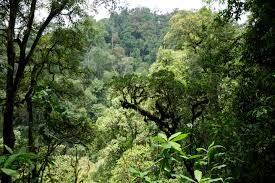


Uganda offers the most diverse primate experience on earth — mountain gorillas, eastern chimpanzees, golden monkeys, L’Hoest’s monkeys, and colobus, all in ancient forest landscapes of breathtaking beauty at a permit cost significantly lower than Rwanda.
Bwindi Impenetrable National Park
📍 Southwest Uganda · DRC BorderA UNESCO World Heritage Site and one of Africa’s most ancient forests — 25,000 years old, unchanged since the last Ice Age. Bwindi protects roughly half the world’s remaining mountain gorilla population across four trekking sectors: Buhoma, Ruhija, Nkuringo, and Rushaga. With 19 habituated families and more permit flexibility than Rwanda, Bwindi is the most accessible gorilla destination on earth — and at roughly half the permit price of Volcanoes NP.
The forest is darker, denser, and more primeval than Rwanda’s Virungas — the “impenetrable” name is earned. Four separate sectors mean you can trek gorillas on consecutive days with completely different families, terrains, and guides. No other park on earth offers this.
🟢 Peak (dry) Jun–Sep · 🟡 Good Dec–Feb · Tan = shoulder · White = wetter
What to Expect
Treks range from 1–8 hours depending on where the gorilla family has moved overnight. You set off with an armed ranger, a guide, and up to 7 other visitors before first light. Trackers radio ahead with the family’s location from dawn. The hour you spend with the gorillas — when a silverback shoulders past you or an infant peers from its mother’s chest — feels entirely unlike anything else in nature.
Combine With
Bwindi pairs naturally with Lake Bunyonyi (30 min drive) for rest after trekking, Mgahinga for golden monkey tracking, and Queen Elizabeth NP (3-hour drive) for tree-climbing lions. The full southwest Uganda circuit — Bwindi + Bunyonyi + Queen Elizabeth + Kibale — is one of Africa’s finest 10-day itineraries.

Mgahinga Gorilla National Park
📍 Kisoro District · Uganda-Rwanda-DRC BorderUganda’s smallest national park — wedged into the corner where three countries meet at the base of the Virunga volcanoes. One habituated gorilla family and the most accessible golden monkey tracking in East Africa. The Batwa pygmy community, displaced from these forests in 1991, run one of the most moving cultural experiences in Africa.
The Batwa Experience — led by the forest’s original inhabitants, who retrace their traditional relationship with the forest they can no longer live in — is genuinely profound. No other park in Africa offers this specific encounter.
🟢 Peak Jun–Sep · 🟡 Shoulder Jan–Feb, Nov
Why Visit
Mgahinga’s golden monkey tracking is arguably its greatest asset — these vivid orange-and-black primates, found only in the Virunga highland zone, move in boisterous, acrobatic troops through the bamboo forest. Gorilla permits here are sometimes easier to obtain at short notice than Bwindi. The summit hike on Mount Sabinyo — crossing the Rwanda and DRC borders at the top — takes 6–8 hours and delivers extraordinary views across three countries.
Kibale Forest National Park
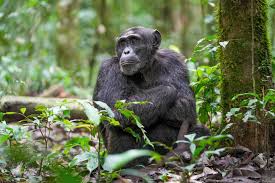
📍 Kabarole District · Western UgandaThe best place on earth to track wild chimpanzees — period. Over 1,500 chimpanzees live in this 795km² moist tropical forest, with multiple habituated communities available for trekking. The forest also shelters 12 other primate species including the rare L’Hoest’s monkey and red colobus, plus over 375 bird species. Chimp tracking here is more reliable and the encounters more intimate than anywhere else in Africa.
When a chimp community breaks into a pant-hoot chorus — males drumming on tree buttresses, calling back and forth across the forest — and you’re standing 5 metres away, the hair on your arms stands up. Kibale is the only place in Africa where this happens reliably, daily.
🟢 Peak (dry) Jun–Sep · 🟡 Shoulder Jan–Feb, Nov–Dec
What to Expect
Habituated chimp communities are located by rangers at dawn. Morning and afternoon treks run daily; the morning slot is preferable — chimps are most active before heat builds. Encounters typically last 1 hour and are genuinely extraordinary. Kibale’s chimps are highly comfortable with human presence and go about their lives — hunting, grooming, socialising — without concern for observers.
Beyond the primate forests, Uganda delivers safari experiences of remarkable quality — tree-climbing lions on volcanic plains, the world’s most powerful waterfall compressed into a 7-metre channel, and a remote northern park that rivals the Serengeti without a single other vehicle in sight.
Queen Elizabeth National Park
📍 Western Uganda · Kasese DistrictUganda’s most visited national park — a mosaic of savanna, forest, wetland, and 50+ explosion craters filled with turquoise water. Famous for two things found almost nowhere else on earth: tree-climbing lions in the Ishasha sector, who lounge in ancient fig trees up to 6 metres off the ground, and the Kazinga Channel boat safari — 36km of waterway where over 5,000 hippos, thousands of buffalos, and herds of elephants gather daily.
Ishasha’s tree-climbing lions are documented in only two places globally — here and Lake Manyara in Tanzania. Nobody fully understands why they do it. Sitting beneath a fig tree watching a pride of 12 lions draped across branches overhead is one of Africa’s most bizarre and unforgettable moments.
🟢 Peak Jun–Sep · 🟡 Shoulder Jan–Feb, Dec
Ishasha Sector
Ishasha is a 2.5-hour drive from the main Mweya peninsula area — worth making the detour. The sector’s fig trees along the Ntungwe River are the lion prides’ preferred resting spots, and guides know the trees well. Lions are seen in the trees most frequently during the midday heat (10am–3pm).
Kazinga Channel
The 2-hour afternoon boat safari on the Kazinga Channel is one of East Africa’s finest wildlife experiences. The channel connects Lakes Edward and George and functions as a permanent wildlife watering point — hippos surface around the boat, massive buffalo herds come to drink, and elephants wade in the shallows. Over 600 bird species recorded along the channel banks.

Murchison Falls National Park
📍 Northern Uganda · Victoria NileUganda’s largest national park — home to Murchison Falls, where the entire force of the Victoria Nile is compressed through a 7-metre gorge in what UNESCO calls the world’s most powerful waterfall. The boat cruise from Paraa to the base of the falls, past crocodiles, hippos, and elephants drinking from the bank, is Uganda’s single greatest wildlife experience.
Standing on the viewing ledge as 300 cubic metres of water per second blasts through 7 metres of rock — the spray soaking you from 30 metres away, the roar drowning all conversation — is a physical experience that no photograph or video can replicate.
🟢 Peak Jun–Sep · 🟡 Shoulder Jan–Feb
The Nile Cruise
The 3-hour morning boat cruise from Paraa up the Victoria Nile to the base of Murchison Falls is the park’s unmissable experience. Hundreds of hippos line the banks; Nile crocodiles sun themselves on sandbars; elephants and buffalos come to drink; and the Rothschild’s giraffe — one of Uganda’s most endangered subspecies — is reliably seen on the north bank game drives.
Uganda sits between two branches of the East African Rift, cradling some of Africa’s most beautiful lakes — including one of the very few on the continent safe to swim in.
Lake Bunyonyi
📍 Kabale District · Southwest UgandaOne of Africa’s most beautiful lakes and almost uniquely safe to swim in — no hippos, no crocodiles, no bilharzia. Bunyonyi (“place of many small birds”) sits at 1,962m in a steep volcanic caldera dotted with 29 islands. The glassy water at dawn — mist rising from the surface, terraced hillsides descending steeply to the shore — looks like something from a fairy tale. Dugout canoe trips and kayaking make it the ideal recovery stop between gorilla treks.
Most African lakes are off-limits for swimming due to hippos, crocodiles, or bilharzia. Bunyonyi is the exception — you can swim freely from your lodge dock in crystal-clear water at 1,962m altitude. After the physical exertion of gorilla trekking, this is exactly what your body wants.
🟢 Year-round destination · Best Jun–Sep, Jan–Feb
Why Visit
Bunyonyi’s 29 islands each have their own history. Punishment Island was traditionally used to abandon unmarried pregnant girls — today it is simply a beautiful sandbar. Bushara Island has a community camp where revenues fund local education. A half-day canoe circuit through the islands and into the channels between the terraced hillsides is one of Uganda’s most peaceful and beautiful experiences.

Lake Victoria — Entebbe & Ssese Islands
📍 Central Uganda · Entebbe & KalangalaThe world’s largest tropical freshwater lake stretches across three countries — Uganda’s shore, centred on Entebbe, gives easy access to the lake’s islands. The Ssese Archipelago (84 islands) is Uganda’s best-kept secret: white-sand beaches, lush rainforest, and the kind of lake-island peace that’s impossible to find anywhere near the safari circuit.
Ssese Islands feel nothing like mainland Uganda — ferry rides between islands, fishing villages, and forest trails that deliver olive colobus monkeys and hornbills. Uganda’s closest thing to a beach resort, without a tourist in sight.
Why Visit
Entebbe’s botanical gardens sit on the Lake Victoria shore and served as the location for the original Tarzan films — today they shelter chimpanzees and a remarkable diversity of water birds. The Ssese Islands are a 1.5-hour ferry from Entebbe and make an excellent first or last night in Uganda — a genuine island escape before a long-haul flight.
Uganda’s remote north is one of Africa’s final frontiers — a semi-arid world of sweeping savanna, ancient Karamojong culture, and a park that regularly appears on “best in Africa” lists but receives almost no visitors.

Kidepo Valley National Park
📍 Kaabong District · Far North Uganda · South Sudan & Kenya BordersRegularly named one of Africa’s top five national parks by travellers who’ve been everywhere — and visited by almost nobody. Kidepo’s vast semi-arid valley in the Karamoja region shelters 77 mammal species including lions, cheetahs, bat-eared foxes, and ostriches on open plains that feel nothing like the rest of Uganda. Because it’s accessible only by small aircraft or an 8-hour drive, visitor numbers stay tiny — you may have the park entirely to yourself.
Kidepo is the closest thing in East Africa to having a private Serengeti. The Narus Valley waterhole fills with buffalo, zebra, and elephant at dusk — with no other vehicle in sight. You don’t share Kidepo with anyone. That exclusivity is the entire point.
🟢 Peak dry Jun–Oct · 🟡 Shoulder Jan–Feb
Why Visit
Kidepo feels like a park that has never quite been discovered — partly because reaching it requires real commitment. Fly-in from Entebbe takes 1.5 hours and is the recommended approach; the drive from Kampala is 8–10 hours over rough roads. Those who make the effort find a park that is frequently compared to the Serengeti in its wildlife density and landscape drama — but entirely without the crowds.

Rwenzori Mountains National Park
📍 Western Uganda · DRC BorderPtolemy’s “Mountains of the Moon” — the source of the Nile in ancient geographical imagination. Africa’s third-highest massif at 5,109m (Margherita Peak), with glaciers, afro-alpine moorlands, and giant heathers 8 metres tall. The 7-day central circuit trek through six vegetation zones is one of the most botanically extraordinary mountain walks on earth.
The Rwenzori’s vegetation zones are unlike anywhere else in Africa — groundsel trees 10m tall, giant lobelias, heather forests draped in old-man’s-beard moss, and glaciers near the equator. It’s Africa’s most botanically surreal mountain range.
Why Visit
The Rwenzori demands real commitment — the 7-day central circuit involves technical glacier sections near the summit and requires crampons, ice axes, and an experienced guide. However, the lower circuit (3–4 days) is accessible to fit walkers and still delivers the extraordinary giant vegetation zones. The mountains receive more rain than almost anywhere else in East Africa, so waterproof preparation is essential.
Ready to Plan Your Uganda Trip?
Gorilla permits sell out months in advance — especially for peak season (June–September). Tell us your dates and we’ll handle permits, lodges, and transfers. All quoted in KES.