

Kenya — Where Safari Began
From the wildebeest crossing the Mara River to giant lobelias on equatorial glaciers, snow-capped peaks above elephant country, and a Swahili island with no cars. Kenya is not one thing — it’s everything.
Safari Heartland
The Mara, Amboseli, Tsavo — these are the names that put Kenya on the map. Each one is different. All of them deliver.
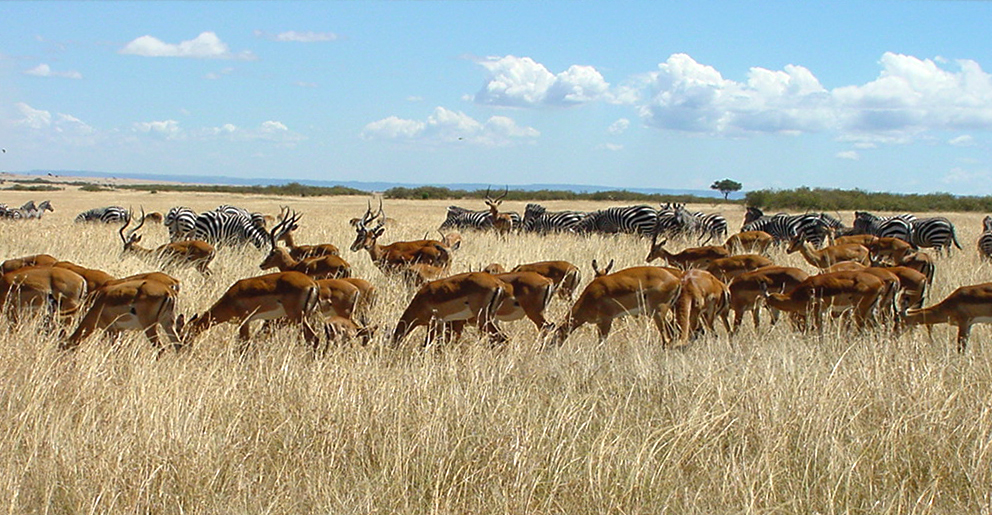
Maasai Mara National Reserve
📍 Narok County · South-West KenyaIn July the first wildebeest reach the Mara River. They pace the bank. Then one commits, the herd explodes, and crocodiles that have waited three months erupt from the water. This happens daily for three months. Outside the Migration, the Mara holds Africa’s highest lion density — multiple prides visible every morning — plus cheetah families and leopards in the riverine forest.
Getting There
45-minute charter flight from Nairobi’s Wilson Airport or 5–6 hour drive via Narok. Fly — the road is rough and the time is better spent in the bush.
How Long
3 nights minimum; 4–5 nights to see the migration properly and explore the conservancies.
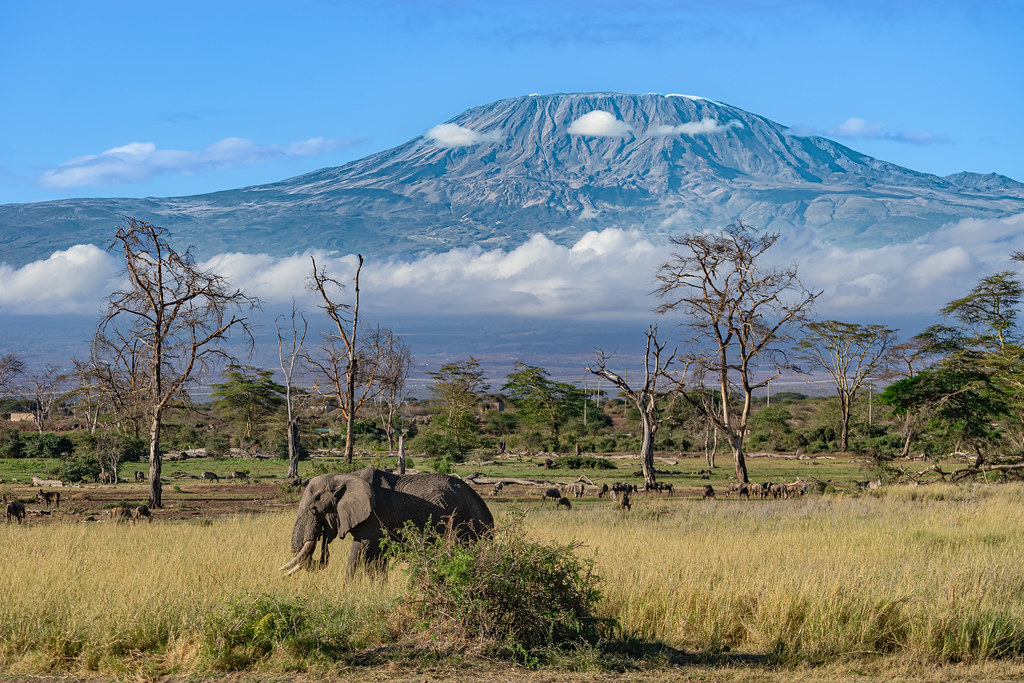
Amboseli National Park
📍 Kajiado County · South KenyaThe elephants here have been studied by the same research team since the 1970s. Guides can tell you each animal’s name, family history, and personality. They walk within metres of vehicles and simply don’t care you’re there. Kilimanjaro clears by 7am on good days — photograph them against Africa’s highest peak before clouds move in.
Getting There
30-minute charter flight from Wilson or 4-hour drive. Often combined with Maasai Mara as a southern Kenya circuit.
Tip
Dawn game drives give you Kilimanjaro clear. By 10am clouds usually obscure the peak. Plan your photography accordingly.

Tsavo East & West
📍 Coast & Eastern ProvincesTsavo is Kenya without the crowds. One-third of the country’s elephant population roams here, and they’re red — iron-rich volcanic soil stains their skin a distinctive rust colour. Tsavo West’s Mzima Springs has an underground glass viewing chamber where you watch hippos swimming from below, their bellies pale and enormous, feet barely touching the riverbed.
Getting There
4-hour drive from Nairobi or 2 hours from Mombasa. Good self-drive roads. Excellent combined with a Diani beach stay.
East vs West
Tsavo East is flatter and drier — better for classic game drives. Tsavo West is hillier, wetter, and has Mzima Springs. Most visitors do both in a single circuit.

Chyulu Hills
📍 Between Amboseli & TsavoYoung volcanoes — some only 500 years old — running in a 80km chain between Amboseli and Tsavo. The Leviathan Cave beneath them is one of the world’s longest lava tubes at 12km. Hemingway called these the “Green Hills of Africa.” Horse safaris here put you alongside wildlife at the same height, same speed — no engine noise, no glass between you and a giraffe.
Getting There
Short charter flight from Wilson Airport or drive from Amboseli (1.5 hrs). Ol Donyo Lodge is the primary base — advance booking essential.
Combine With
Perfectly positioned between Amboseli and Tsavo. Add Chyulu as a 2-night middle stop on a southern Kenya circuit.
The Highland Heartland
Africa’s second-highest mountain, Kenya’s most endangered wildlife, and forests so dense they get their own weather system. The highlands are a completely different Kenya.

Mount Kenya National Park
📍 Central Kenya · Crosses the EquatorAbove 3,800m, the vegetation stops making sense. Giant lobelias grow 3 metres tall — alien-looking plants that exist on only a handful of equatorial peaks on earth. At dawn you walk through them in silence with the glaciated summit turning pink above you and cloud forest below. No technical equipment needed for Point Lenana (4,985m) — just fitness and a guide who knows the mountain.
Routes
Sirimon (3 days up, descent via Chogoria) is the most popular with best acclimatisation. Chogoria through bamboo forest and the Gorges Valley is the most scenic. Naro Moru is shortest but steepest.
What to Expect
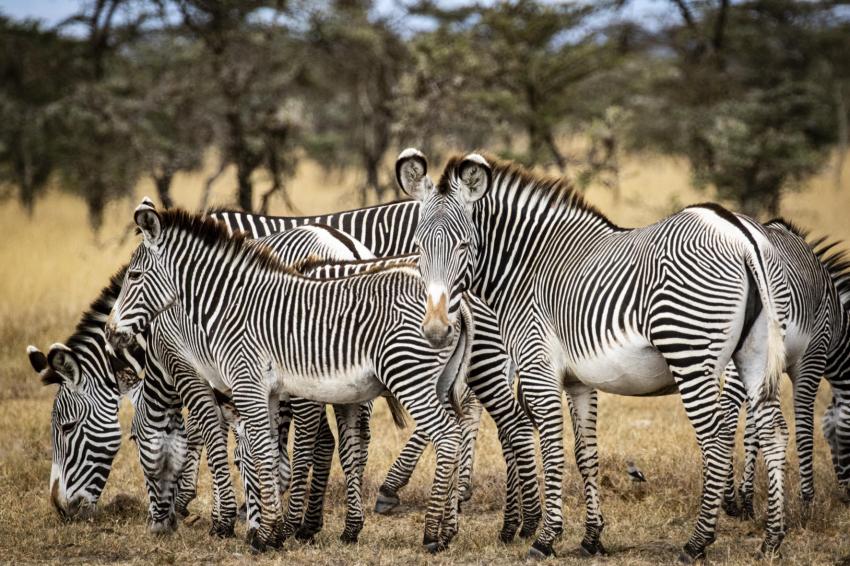
Laikipia Plateau
📍 Laikipia County · Central KenyaLaikipia has the densest population of endangered species in Kenya outside national parks — 100+ black rhinos, wild dogs, Grevy’s zebras. It’s the only place on earth where you can track a black rhino on foot in the morning, ride a camel past reticulated giraffes at noon, and do a night drive searching for aardvarks and porcupines at dusk. Every lodge here feeds directly into the community conservancy model.
Getting There
Charter flight from Wilson to lodge airstrips (45 min) or 3.5-hour drive from Nairobi. Ol Pejeta is the largest conservancy and best for first-timers.
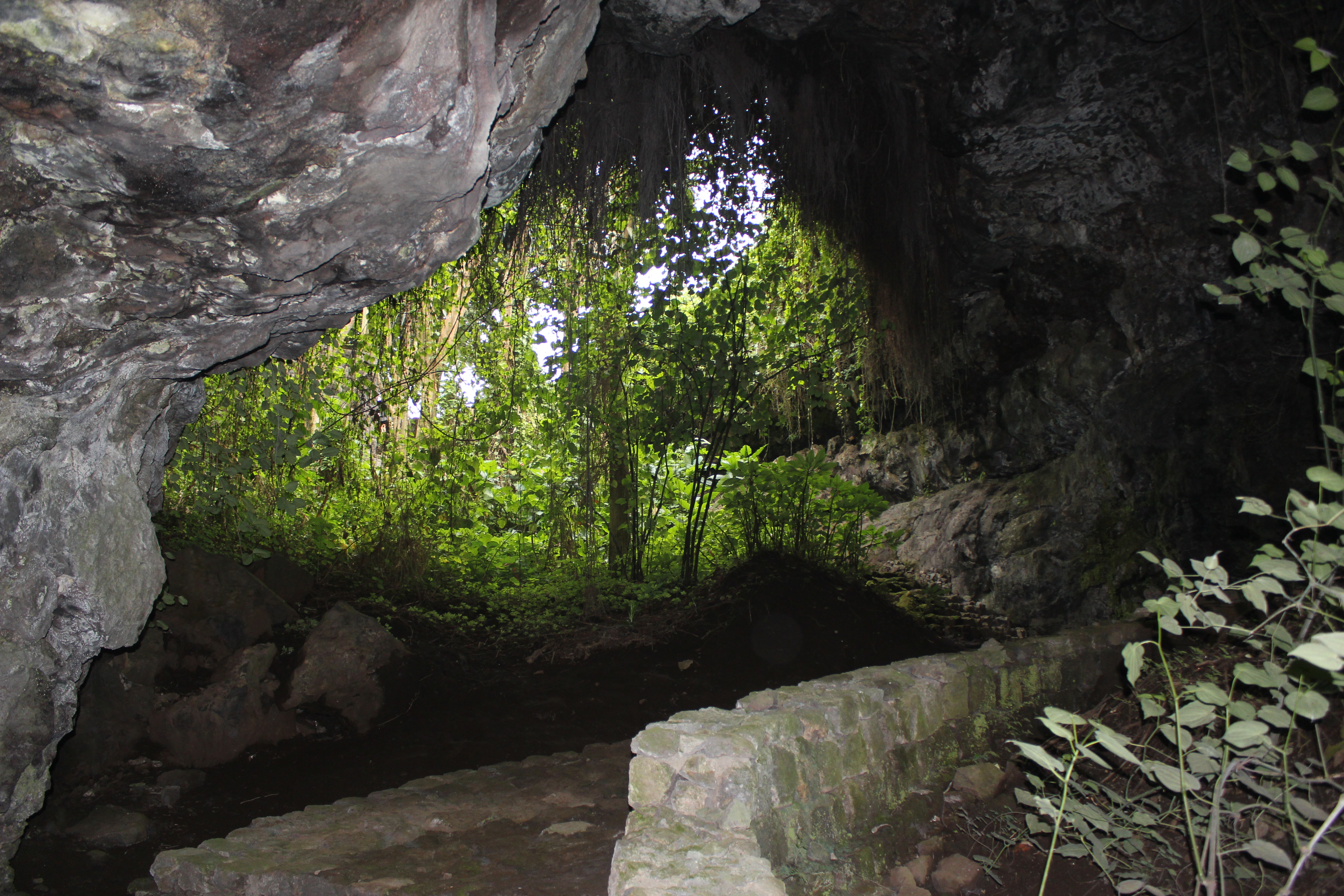
Aberdare National Park
📍 Nyeri County · Central HighlandsRain-soaked montane forest where it’s cool, misty, and completely unlike anywhere else in Kenya. The famous Treetops and The Ark lodges are built over floodlit waterholes — elephants, rhino, and buffalo arrive in the dark while you watch from above with tea in hand. Queen Elizabeth II was at Treetops in 1952 when she learned she had become queen.
Getting There
2.5-hour drive from Nairobi. Usually combined with Mount Kenya as a central highlands circuit. Treetops and The Ark are the main lodges — both require advance booking.
The Great Rift Valley
A 9,600km crack in the planet’s crust. Kenya’s section has filled it with volcanoes, soda lakes, geysers, and millions of flamingos.

Lake Nakuru National Park
📍 Nakuru County · Central Rift ValleyThe entire shoreline can turn pink. Up to two million lesser flamingos filter algae from the alkaline lake in a continuous loop of feeding and movement — from above it looks like the water itself is moving. The park is also fully fenced, making it the most reliable place in East Africa to see both black and white rhino on a single morning game drive.
Getting There
2-hour drive from Nairobi on a good road. Often combined with Hell’s Gate and Lake Naivasha in a single Rift Valley loop.

Hell’s Gate National Park
📍 Naivasha · Southern Rift ValleyThe only national park in Kenya where you walk and cycle freely through wildlife with no guide required. Giraffes and zebras ignore cyclists entirely. The gorge hike descends through narrow red-walled slots of volcanic rock into chambers warmed by geothermal steam, with hot springs at the base. The cliff faces here directly inspired the landscapes in Disney’s The Lion King.
Getting There
90-minute drive from Nairobi. Hire bicycles at the gate — they’re basic but functional. The gorge hike takes 2–3 hours. Combine with Lake Naivasha hippo boat ride on the same day.

Lake Naivasha
📍 Nakuru County · Southern RiftAt Crescent Island you walk — no vehicle, no guide, no fence — through herds of giraffe, zebra, and wildebeest. The island has no predators, so the animals have never learned fear. A hippo boat ride at dusk brings you within a few metres of pods surfacing in the yellow fever tree shallows. The drive back to Nairobi takes 90 minutes.
Getting There
90 minutes from Nairobi. Best combined with Hell’s Gate for a full day — cycle the gorge in the morning, hippo boat at dusk. Excellent for families.
The Frontier North
Most people never get here. The ones who do come back. Vast semi-desert, ancient tribal cultures, and wildlife found nowhere else in Africa.

Samburu National Reserve
📍 Samburu County · Northern KenyaThe wildlife here doesn’t exist in the south. Reticulated giraffes — net-patterned, taller than their Maasai cousins — move through the acacia along the Ewaso Ng’iro River. The gerenuk browses upright on its hind legs like it forgot it’s an antelope. Grevy’s zebras have round ears and narrow stripes. These five species are found only in Kenya’s arid north and nowhere else in the south.
Getting There
45-minute charter flight from Wilson Airport. 5-hour drive is possible but long — fly and save the time for game drives.
Combine With
Samburu pairs well with Laikipia (similar ecosystem, different wildlife) or Mount Kenya for a full central and northern Kenya circuit.

Lake Turkana — The Jade Sea
📍 Turkana County · Far North KenyaThe world’s largest permanent desert lake glows jade-green from alkaline minerals, surrounded by volcanic rock and sky. The drive north through Turkana territory — past camel herds, Turkana warriors, and landscapes that feel older than anything else in Kenya — is itself half the experience. Central Island in the lake holds one of the world’s largest Nile crocodile breeding colonies in volcanic crater lakes.
Getting There
Charter flight to Loyangalani (1.5 hrs from Wilson) or an epic 2-day 4WD expedition drive. The drive is for serious adventurers — the road is rough and remote. A guide is essential either way.

Mathews Range
📍 Samburu County · Northern Kenya850,000 acres of remote mountain wilderness managed entirely by the Samburu community, visited by almost nobody. Elephants, wild dogs, and greater kudu inhabit the forest. Sarara Camp overlooks a floodlit waterhole where elephants arrive after dark and trumpet through the night. Your guides are Samburu warriors who have tracked these animals since childhood.
Getting There
Charter flight to Namunyak airstrip from Wilson (1 hr). Accessible only by air or serious 4WD. Sarara Camp is the primary lodge and requires advance booking — very limited capacity.
The Indian Ocean Coast
480km of coastline — ancient Swahili cities, coral gardens, dhow ports, and beaches that have been voted the best in Africa for good reason.
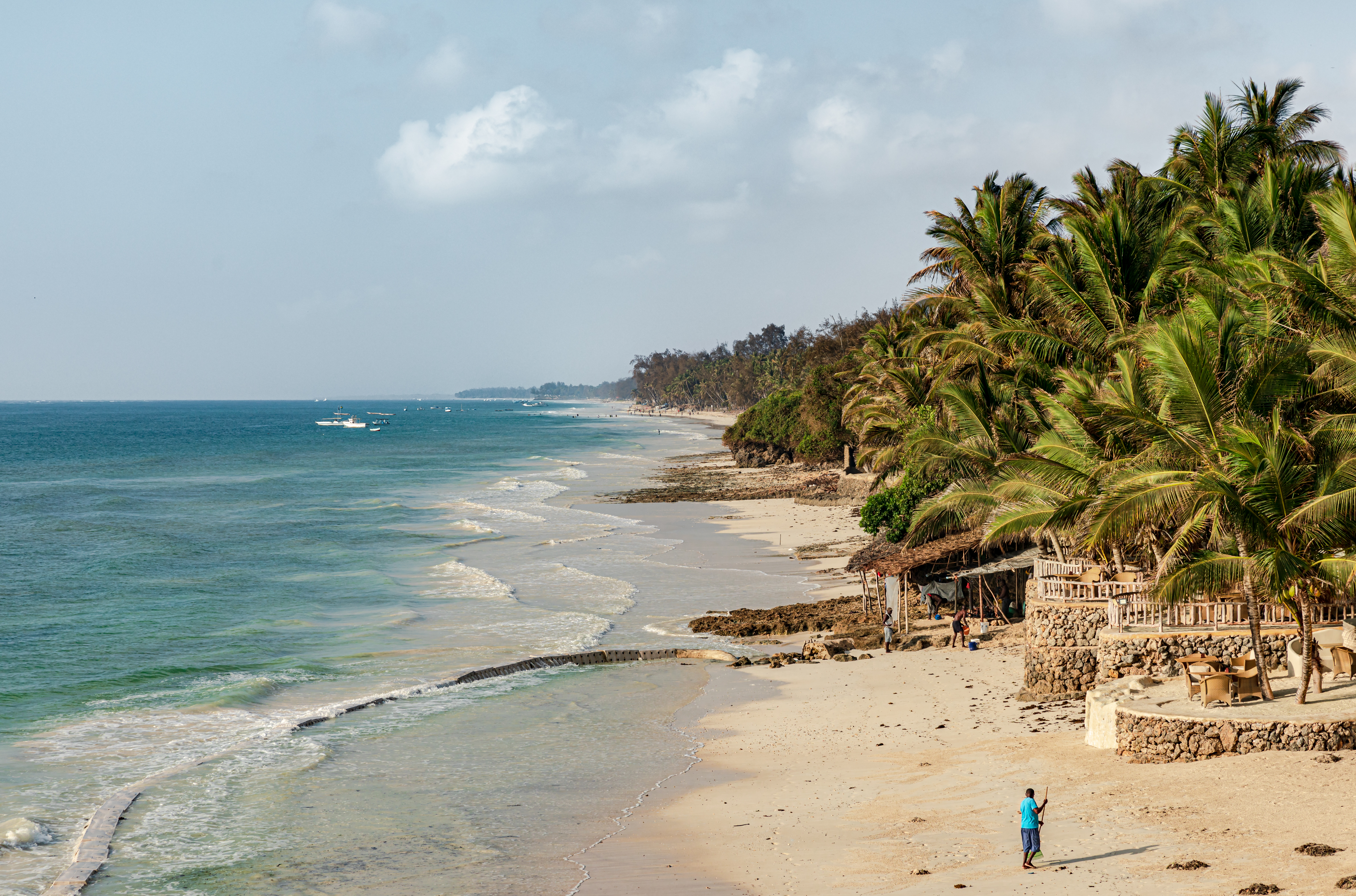
Diani Beach
📍 Kwale County · South CoastThe reef sits 200 metres offshore, accessible at low tide by wading — no boat, no guide, just snorkel. The coral is intact and the fish life is excellent. Behind the beach, colobus monkeys move through the coastal forest and have no fear of people — they’ll sit 2 metres from you on a branch and ignore you completely. South of Diani, Kisite-Mpunguti Marine Park is Kenya’s finest snorkelling with spinner dolphins that join swimmers.
Getting There
45-minute flight from Nairobi to Ukunda airstrip, or 6-hour drive. The Likoni ferry crossing from Mombasa adds character but also time. Most visitors fly.
Add On
Shimba Hills reserve is 40 minutes from Diani — Kenya’s only coastal forest reserve and home to the rare sable antelope. An excellent half-day safari that most beach visitors miss.

Lamu Island
📍 Lamu County · Northern CoastThere are no cars on Lamu. Transport is by donkey or by foot, through streets so narrow two people can barely pass each other. The old town has been continuously inhabited for 700 years and looks it — carved Swahili doorways, rooftop terraces, the smell of cardamom. Every morning wooden dhows leave the harbour. Every evening the call to prayer echoes off coral walls at sunset.
Getting There
1-hour flight from Nairobi to Manda airstrip, then a short dhow crossing to Lamu town. The arrival by sea sets the tone perfectly.
Stay In
A traditional Swahili guesthouse in the old town is essential — rooftop terrace, carved beds, breakfast with the harbour below. Not a beach resort.
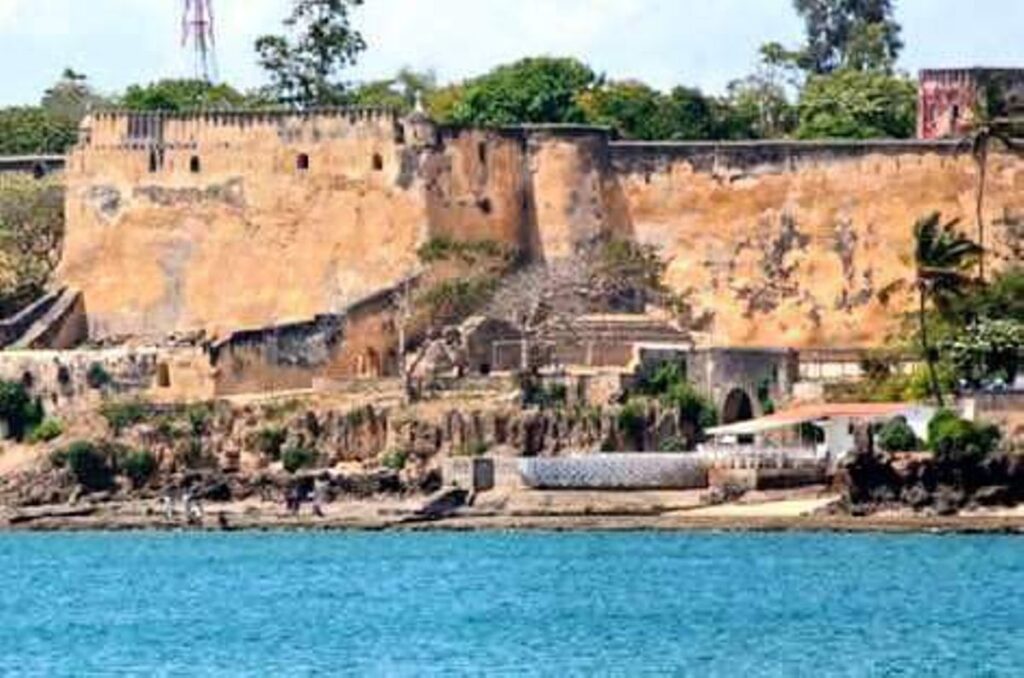
Watamu & Gedi Ruins
📍 Kilifi County · North CoastWatamu’s marine park has coral gardens you wade into directly from the beach — no boat, no kit, just snorkel and reef at shin depth at low tide. Whale sharks pass through the bay between October and March. Twenty minutes inland, the Gedi Ruins are a 12th-century Swahili city swallowed by forest, abandoned without explanation in the 1700s. Half the buildings are still unexcavated.
Getting There
1.5-hour drive from Mombasa Moi International Airport. Malindi is 20 minutes north and has direct flights from Nairobi. Watamu is quieter and more beautiful than Malindi.
The Safari Capital
Lions visible from the highway. Giraffes fed by hand. Baby elephants in mud. Nairobi delivers genuine wildlife experiences within the city boundaries.

Nairobi National Park
📍 7km from Nairobi CBDThe only national park on earth inside a capital city. Seven kilometres from downtown, lions hunt on the plains with the Nairobi skyline as the backdrop. The southern boundary is open — wildlife migrates freely in and out. Black rhino, cheetah, leopard, buffalo, and 400+ birds, 30 minutes from your hotel.
Getting There
30-minute drive from the CBD. Dawn game drives are best. Combine with the Sheldrick Trust (11am only) and Giraffe Centre for a full Nairobi wildlife day.

Sheldrick Wildlife Trust
📍 Karen, NairobiEvery day at 11am, baby elephants that have lost their mothers to poaching or conflict come out for a mud bath. They’re chaotic, joyful, and completely unself-conscious. Keepers in green coats hold bottles of formula while babies charge each other into the mud. The trust has raised 250+ orphans since 1977 and returned most of them to the wild.
Visit Window
Public visiting is 11am–noon only, daily. Book tickets online in advance — they sell out. Adopt an elephant beforehand at sheldrickwildlifetrust.org for the full experience.

Nairobi Giraffe Centre
📍 Langata, NairobiRothschild’s giraffes come to the raised wooden platform at eye level and take food pellets directly from your palm — or from your mouth if you’re bold enough. Fewer than 800 of this subspecies exist in the wild. The centre has bred and released over 10 into Kenyan reserves, and the education programme reaches thousands of Kenyan schoolchildren every year.
Getting There & Timing
20 minutes from the CBD in Karen. Open 9am–5:30pm daily. Combine with the Sheldrick Trust (11am) for a full morning. Karen Blixen Museum is 10 minutes away.
The Forgotten West
Kenya’s green, cool, overlooked west — the last equatorial rainforest in East Africa, the world’s largest tropical lake, and a volcano where elephants mine salt underground.

Kakamega Forest
📍 Kakamega County · Western KenyaThe last surviving fragment of the Guineo-Congolian rainforest that once stretched across equatorial Africa. The birds here don’t exist anywhere else in Kenya — the Great Blue Turaco, the African dwarf kingfisher, the black-and-white casqued hornbill. Night walks reveal a different forest entirely: chameleons change colour in your headlamp, tree pangolins curl on branches, bushbabies call from the canopy.
Getting There
1-hour flight from Nairobi to Kisumu, then 45-minute drive. Rondo Retreat is the classic base — colonial-era guesthouse on the forest edge. Book a local KWS guide for dawn birding.

Mount Elgon
📍 Bungoma County · Uganda BorderAn extinct volcano with a 40km caldera — the world’s largest. Inside the mountain, Kitum Cave descends 200 metres into salt-laced volcanic rock. For thousands of years, elephants have come here at night to mine salt with their tusks — chiselling chunks of rock and grinding it down. To watch them entering the pitch-black cave in single file is unlike anything else in Kenya.
Getting There
Fly to Kisumu (1 hr from Nairobi) then drive 3 hours to Kitale/Endebess near the park gate. Most visitors overnight at a basic guesthouse and do cave night walks with a guide. Summit trekking is 3–4 days.
Plan Your Kenya Trip
Tell us which regions call to you — Mara migration, Mount Kenya trek, Lamu island, or a full Kenya circuit — and we’ll build the itinerary. All quoted in KES from Nairobi.